Preamble of the Indian Constitution
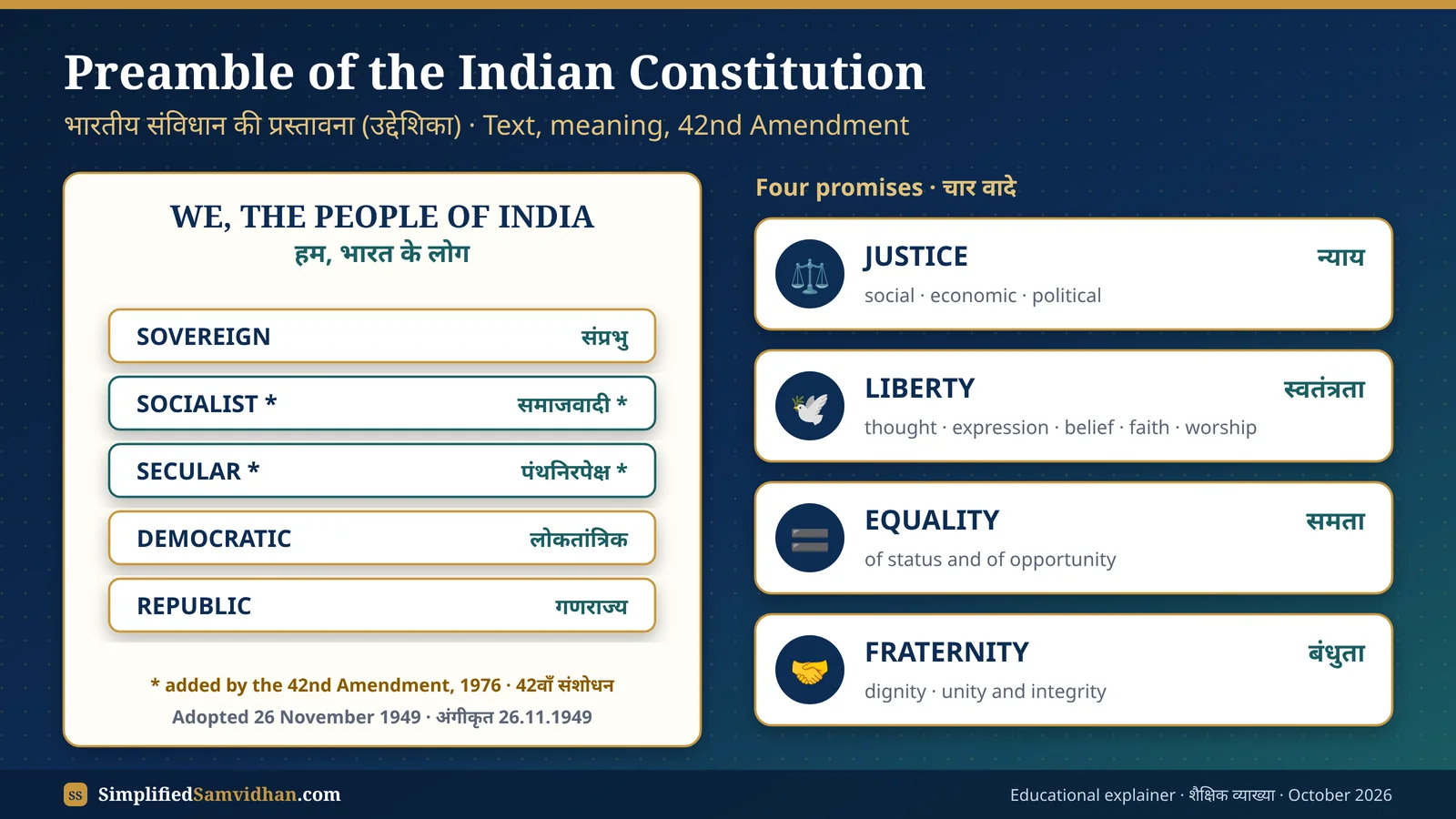
Full text, meaning of each keyword with examples, history from the Objectives Resolution to the 42nd Amendment, and the Berubari vs Kesavananda question.
Read the notes →Ten high-yield topics, each with the official text, a simple explanation, tables, one-line revision points and practice MCQs. Free, in English and Hindi.
Start with the Preamble, then follow the order below: it is the order in which most textbooks and the UPSC syllabus build the subject. Every page ends with one-line revision points and MCQs, so you can revise a topic in five minutes before a test. Read the Articles themselves, part by part, in our Constitution section.
Full text, meaning of each keyword with examples, history from the Objectives Resolution to the 42nd Amendment, and the Berubari vs Kesavananda question.
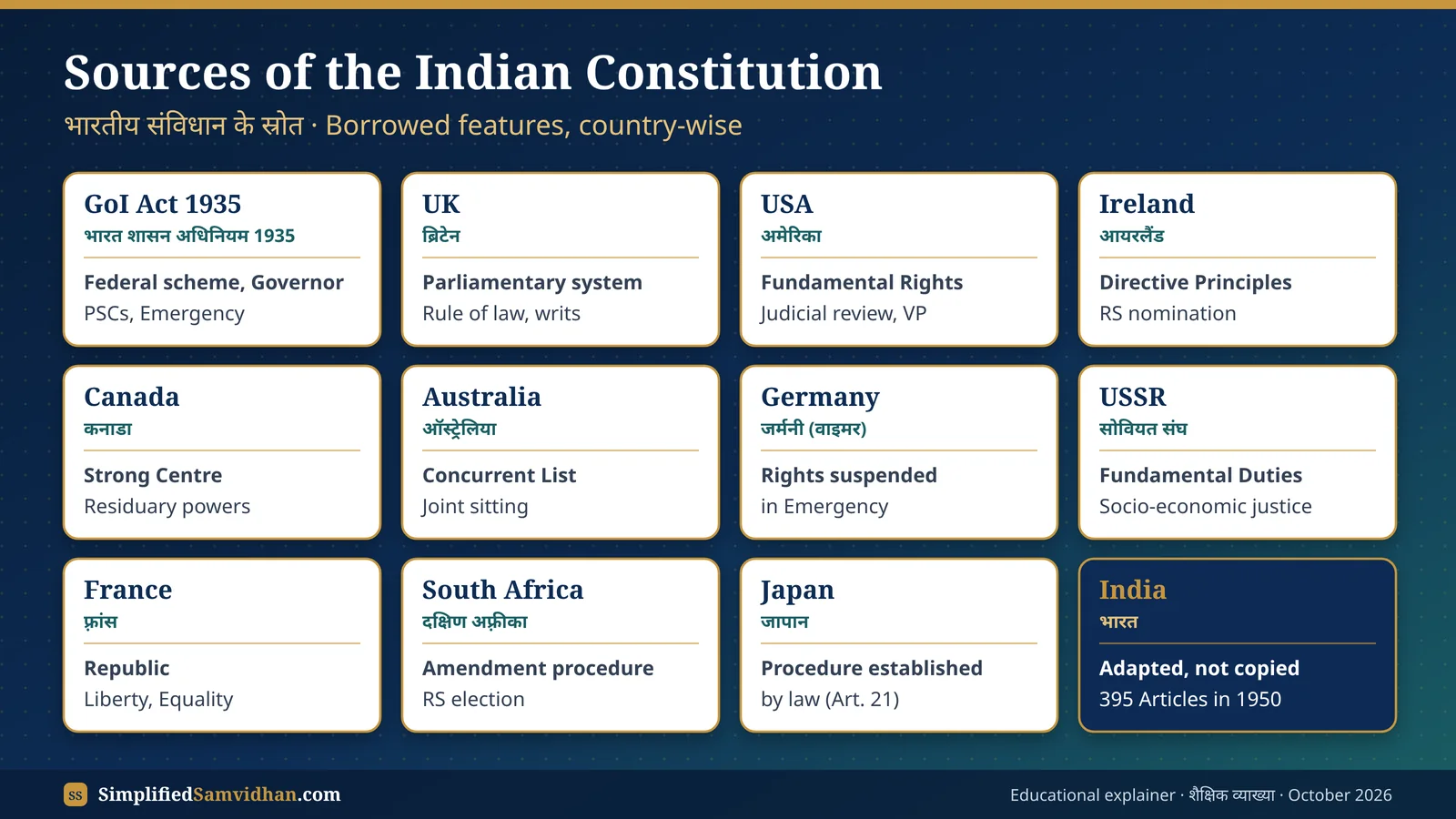
Read the notes →Country-wise table of borrowed features, the GoI Act 1935, memory tricks, exam traps and the salient features of the Constitution.
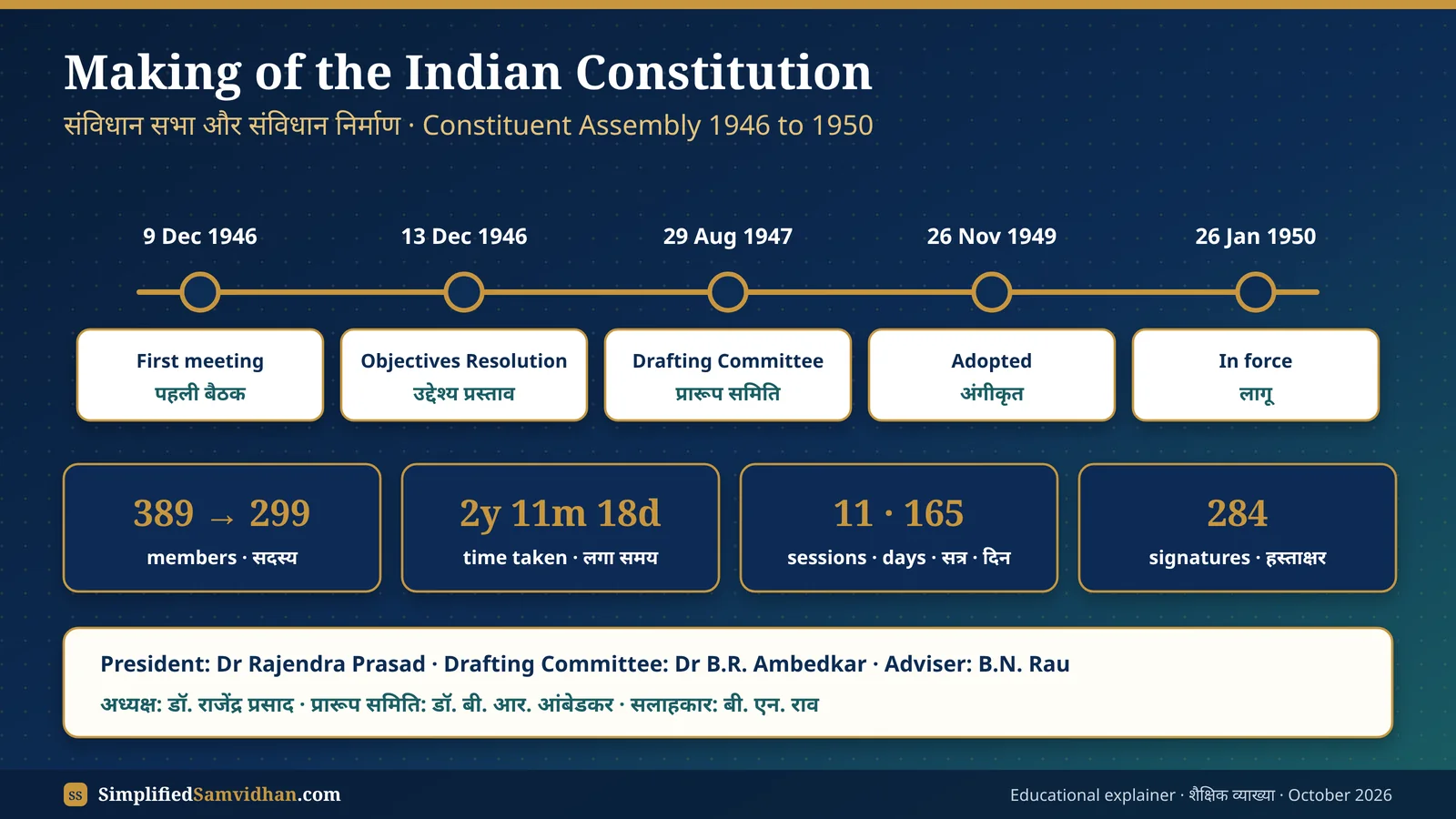
Read the notes →Cabinet Mission Plan, composition, timeline 1934 to 1950, Drafting Committee members, committees and chairmen, Constitution Day facts.
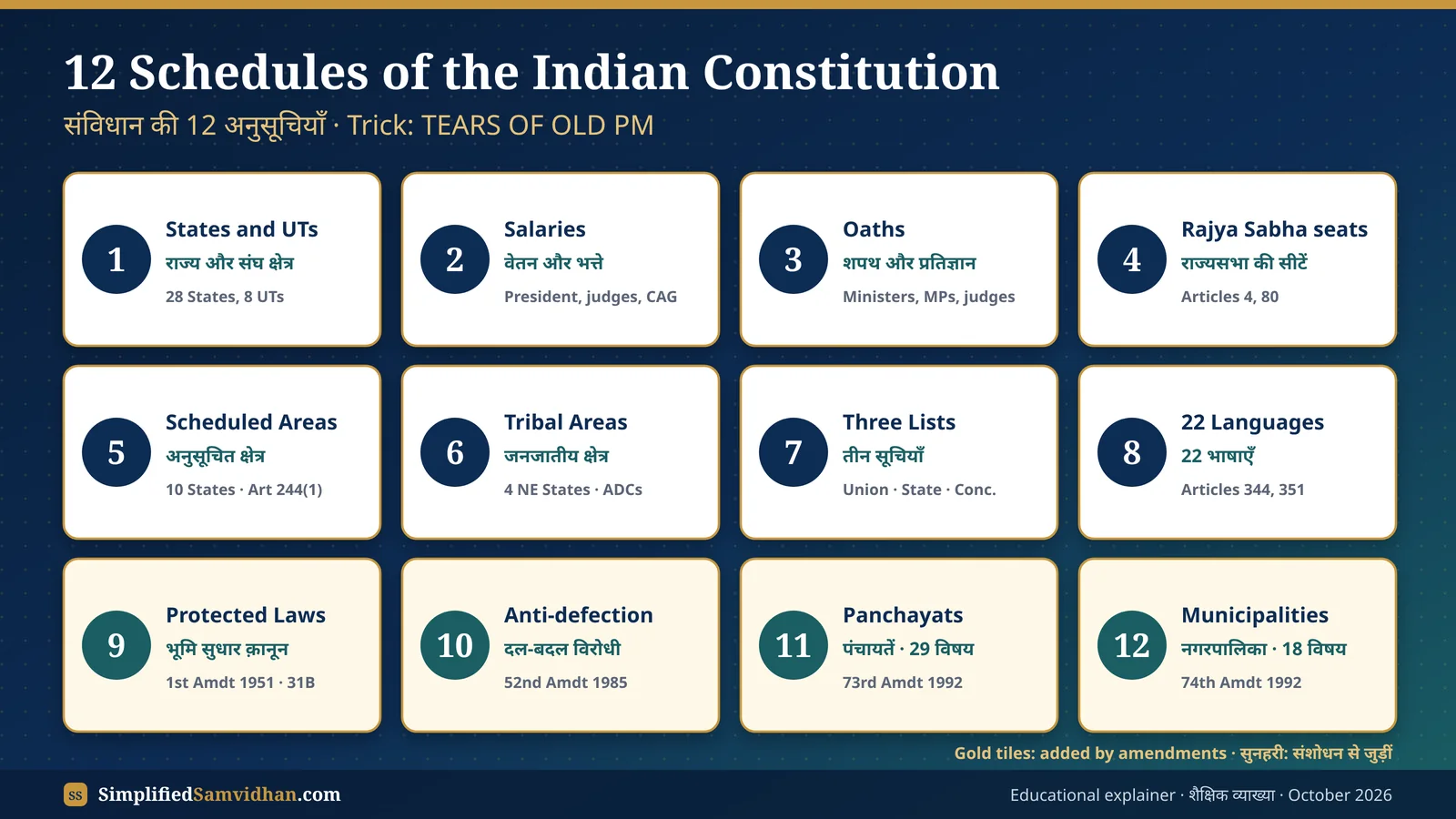
Read the notes →All 12 Schedules with Articles, the amendments that added the 9th to 12th, 22 languages, anti-defection, 5th vs 6th Schedule and a memory trick.
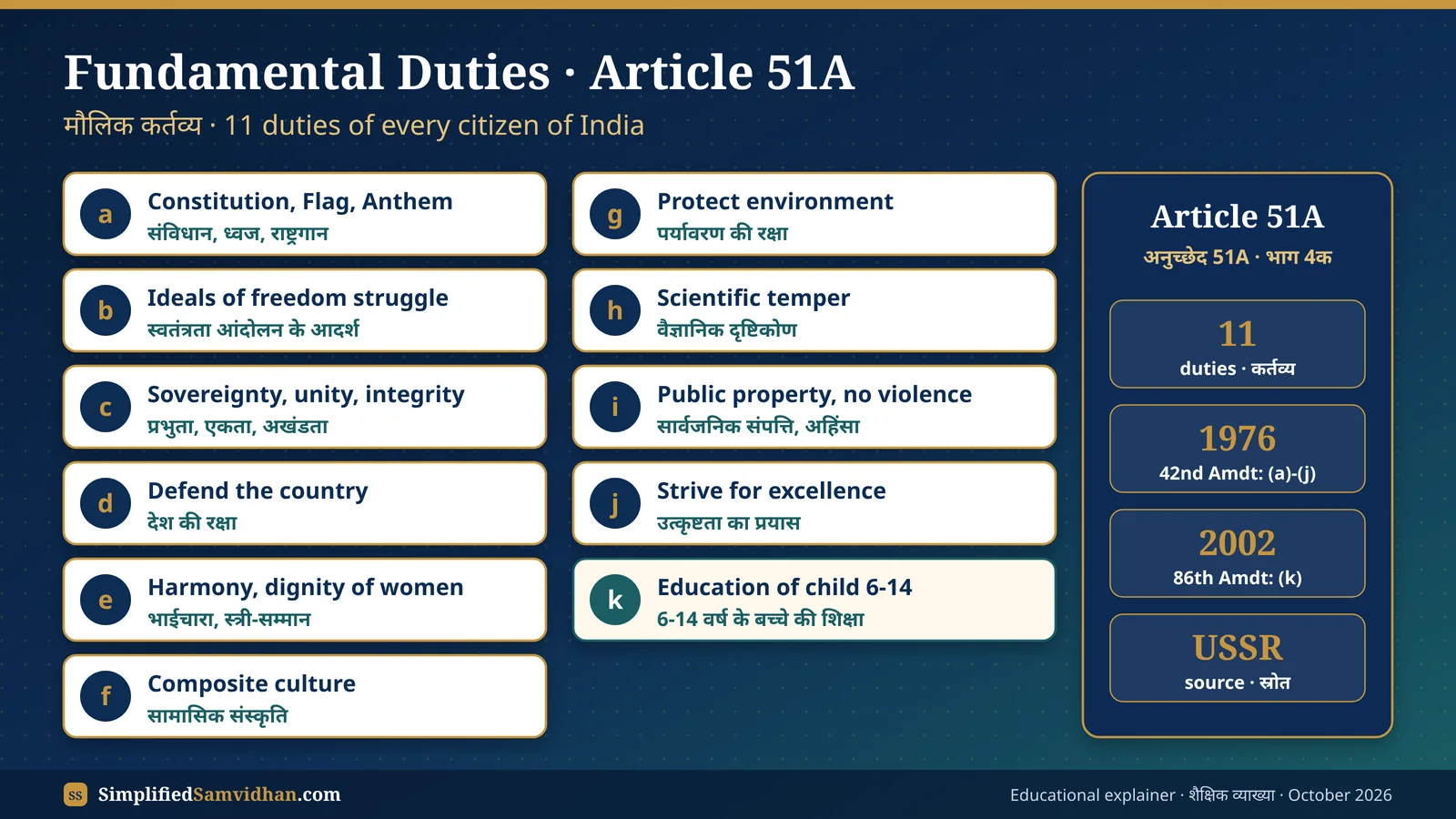
Read the notes →Full text of all 11 duties with examples, Swaran Singh Committee, 42nd and 86th Amendments, Verma Committee, key cases and a rights vs duties table.
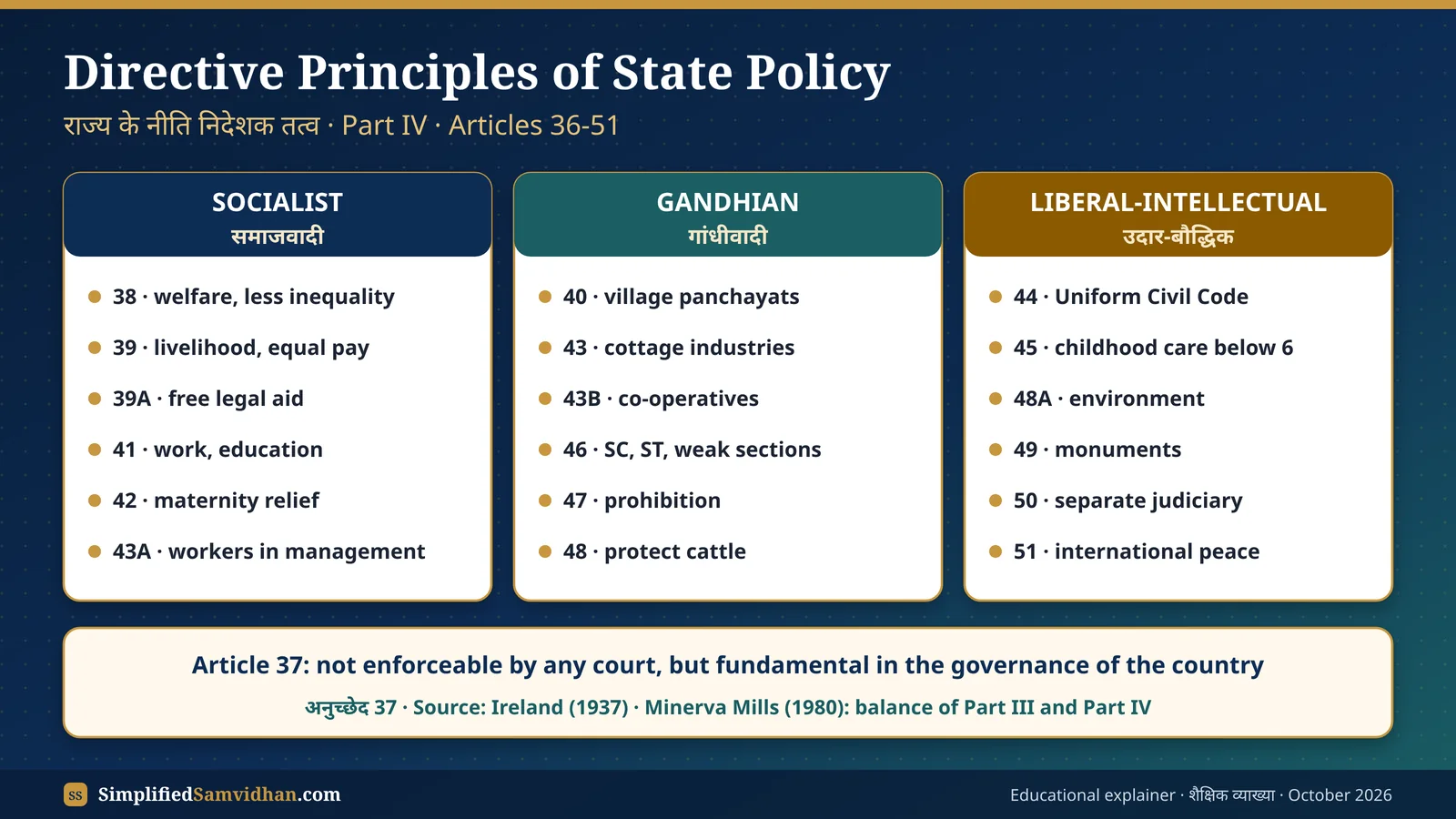
Read the notes →Article 37, the three groups with an article table, amendments that added new principles, Champakam to Minerva Mills, FR vs DPSP and what has been implemented.
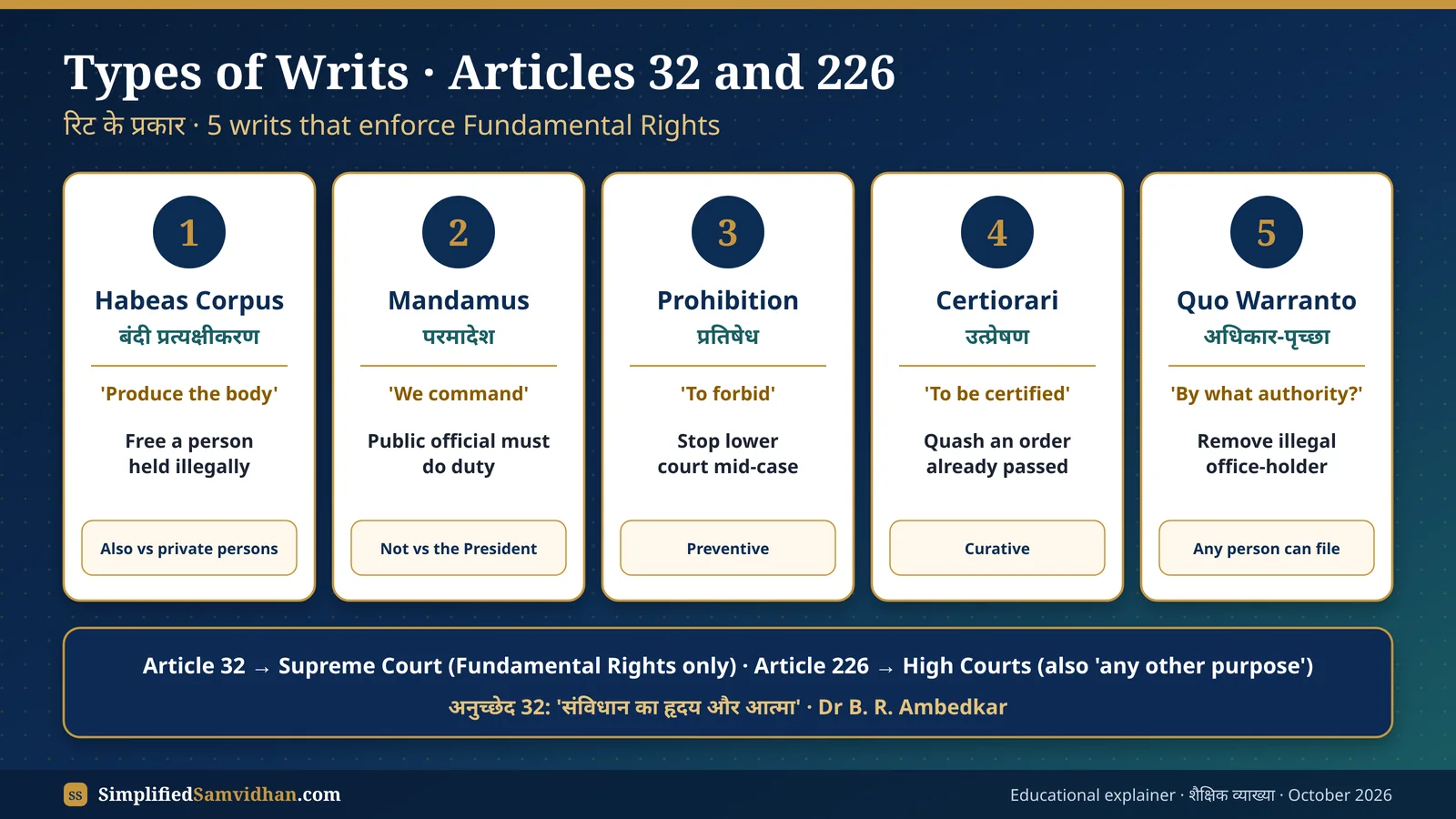
Read the notes →Article 32 text, the five writs with meaning, scope and examples, Article 32 vs 226, ADM Jabalpur and Puttaswamy, and how PIL opened the courts.
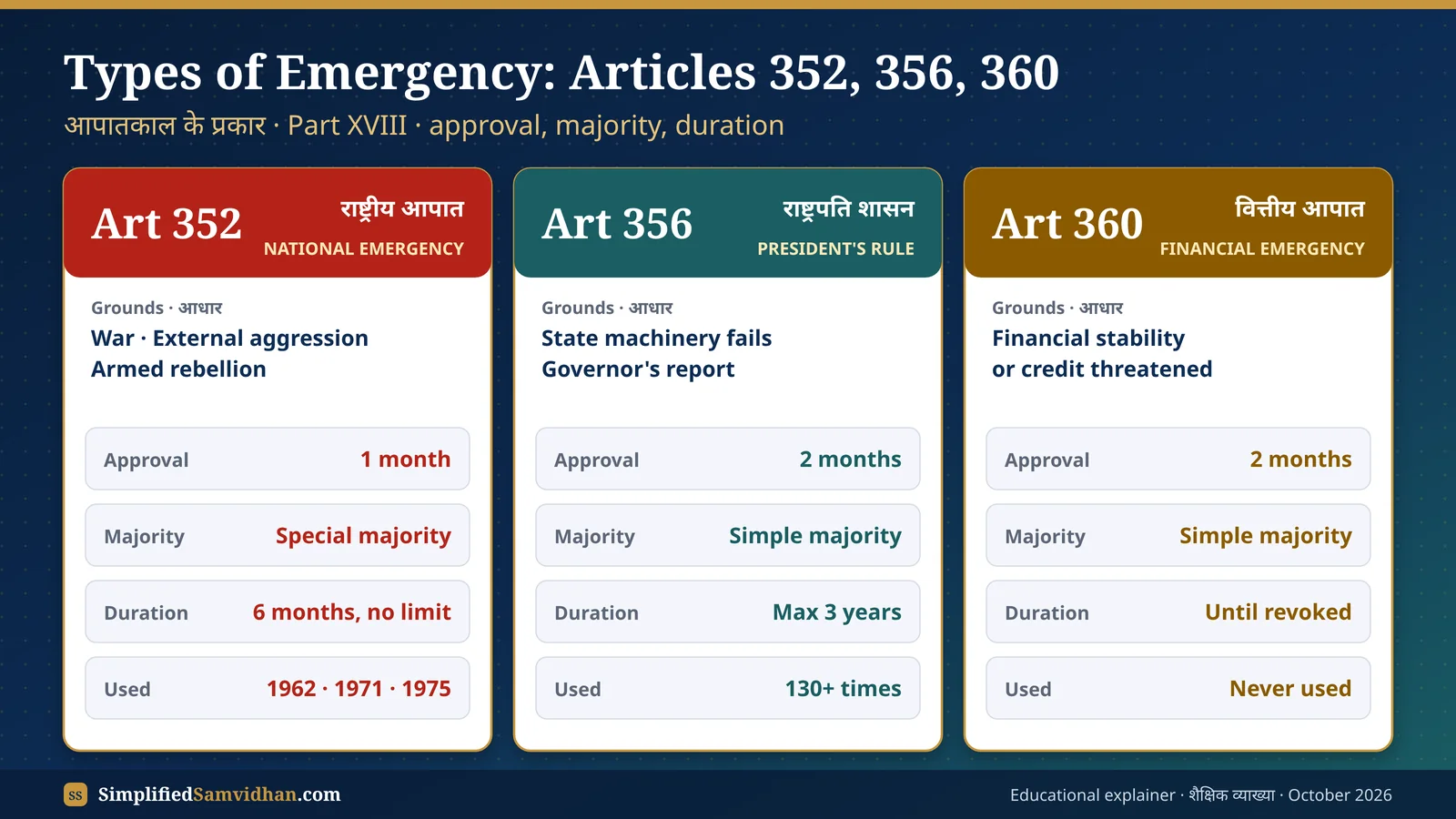
Read the notes →Three types of emergency compared, 44th Amendment safeguards, Article 358 vs 359, the 1962, 1971 and 1975 Emergencies, President's Rule and the Bommai case.
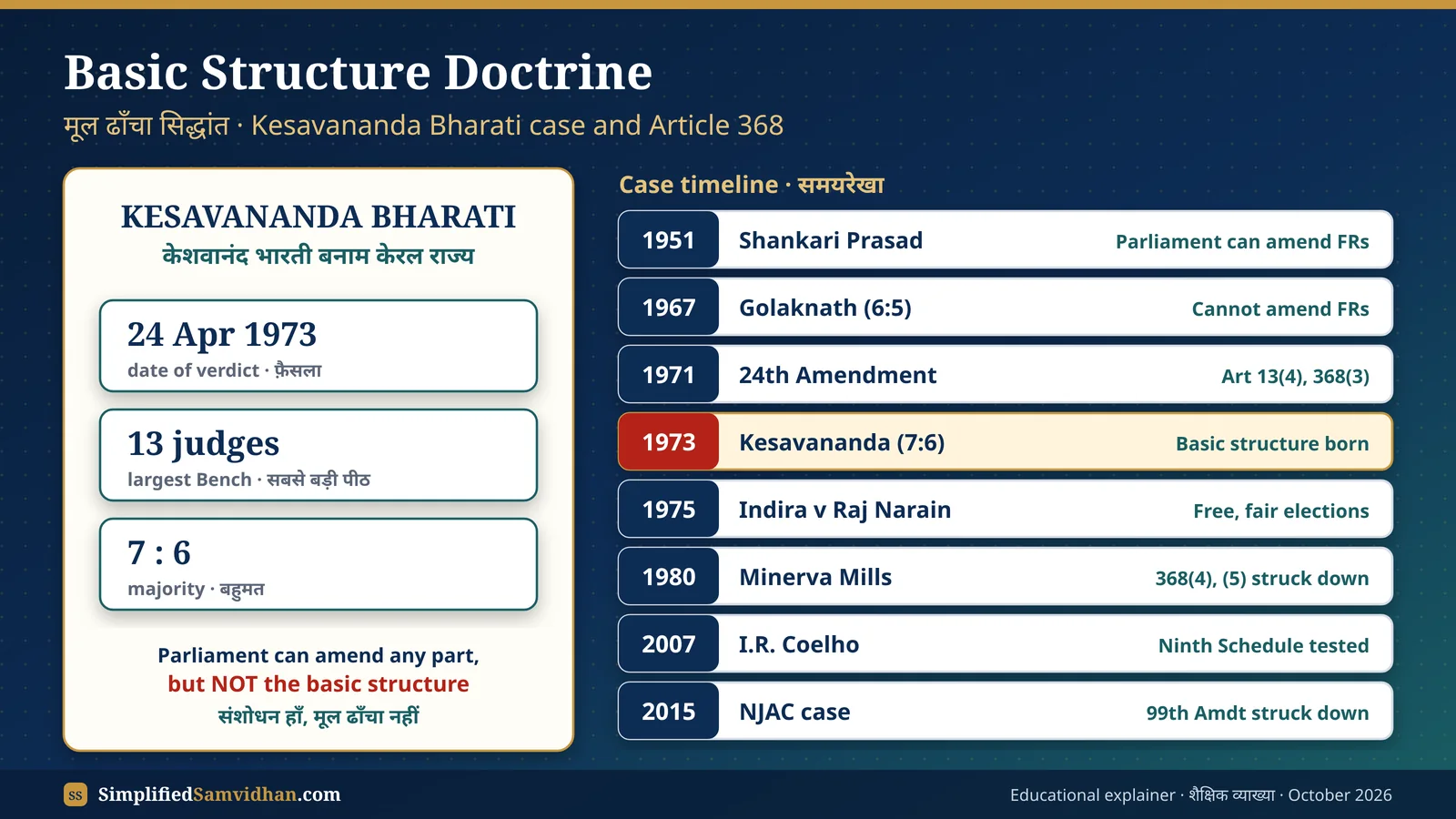
Read the notes →Article 368, the case timeline from Shankari Prasad to the NJAC case, the 7:6 Kesavananda verdict and the list of basic features.
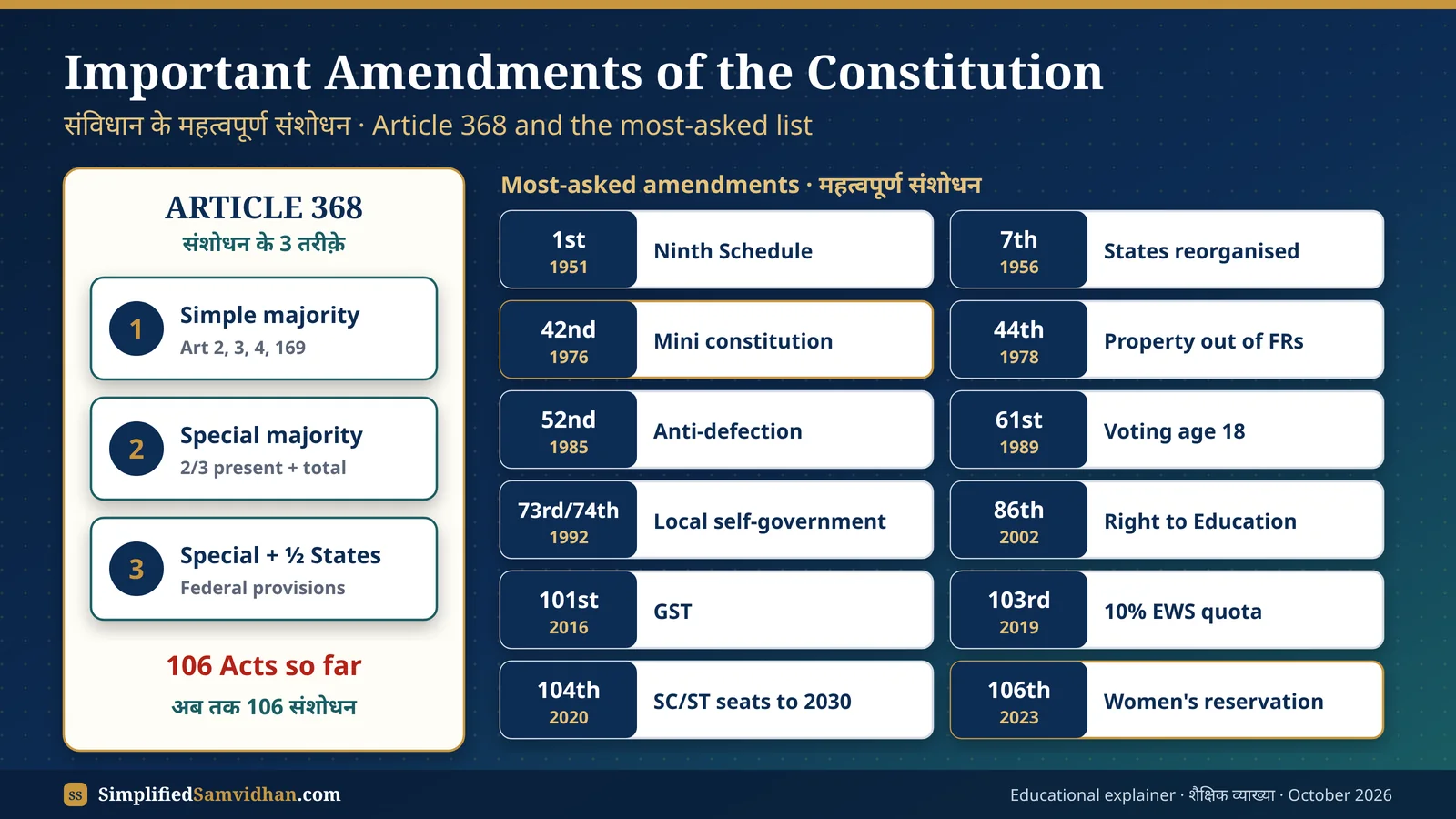
Read the notes →Article 368 procedure, the three types of amendment, a one-table list of the most-asked amendments, 42nd vs 44th, and the 2024 to 2026 Bills.
Read the notes →On SimplifiedSamvidhan.com. Every Article and every polity topic shows the official text first, then an In Simple Words / आसान शब्दों में box with everyday Indian examples, in both English and Hindi. It is free to read.
Start with the Preamble, then the sources and making of the Constitution, the 12 Schedules, Fundamental Rights, DPSP, Fundamental Duties, writs, emergency provisions, the basic structure doctrine and important amendments. This page lists them in that order.
Yes. Every page on this site is free to read online. A few printable PDF notes are offered separately for ₹5, but the online notes are complete without them.
The quoted Article text follows the Constitution of India published by the Legislative Department, Government of India. The explanations are for learning and exam preparation, not legal advice.