Election Commission of India: History and All CECs
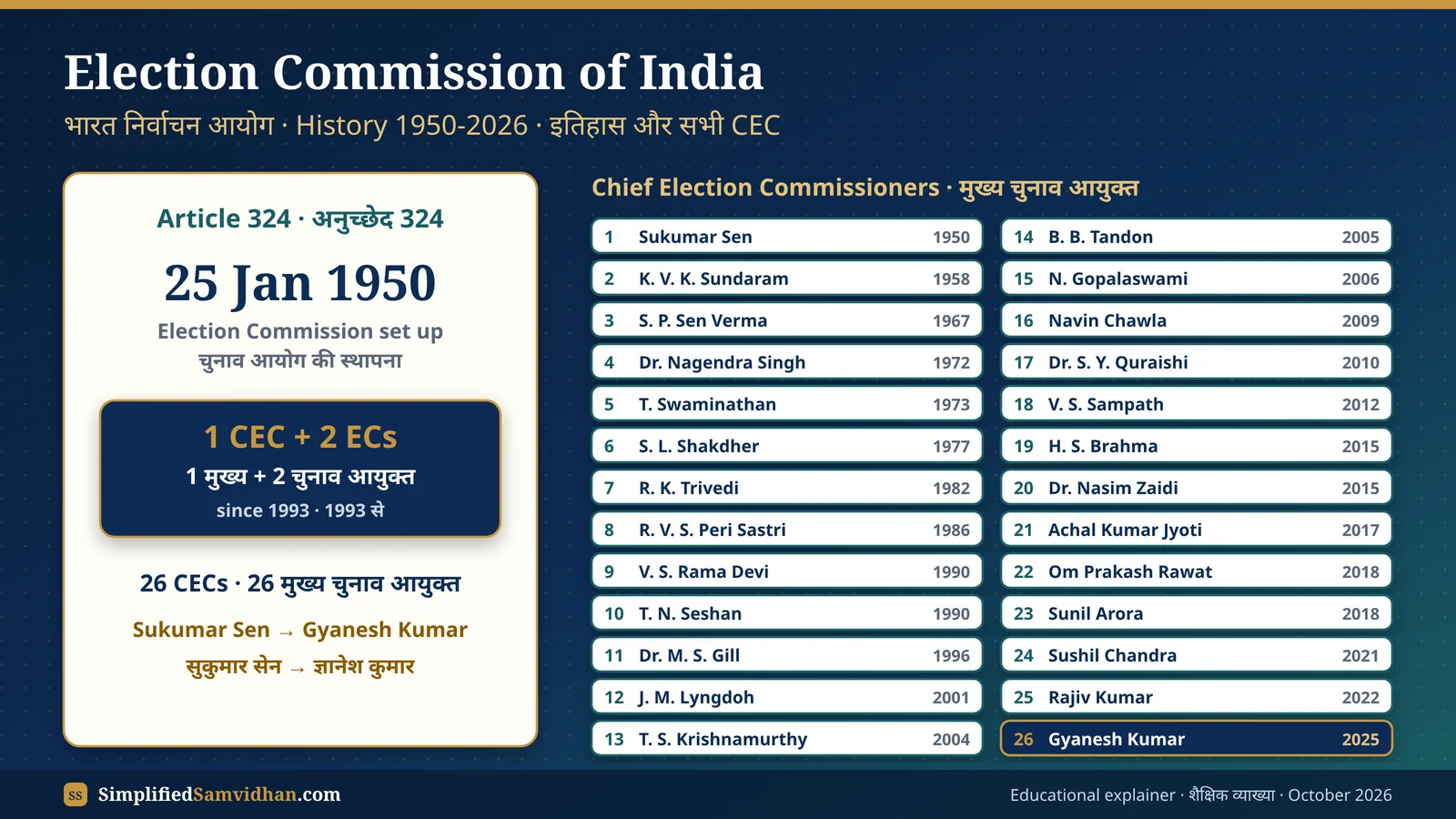
What the Election Commission is, its structure, its story from 1950, and a full table of all 26 Chief Election Commissioners.
Read the notes →Who runs India's elections, how the Chief Election Commissioner is chosen and removed, how your name gets on the voter list, what the Model Code and EVMs are, and when a winner can be unseated. Read in order, in English or Hindi.
Start with the Election Commission of India page: it tells the full story from 1950 and lists all 26 Chief Election Commissioners. Then follow the order below, from powers and appointment to voting, the Model Code, EVMs, money in politics, disqualification and election petitions. Notes 12 to 16 cover local elections: how many times you vote in five years, the State Election Commission, the sarpanch and parshad elections, and the 61st Amendment (voting age 18). Every page has the official text, an In Simple Words box, one-line revision points and five MCQs.
What the Election Commission is, its structure, its story from 1950, and a full table of all 26 Chief Election Commissioners.
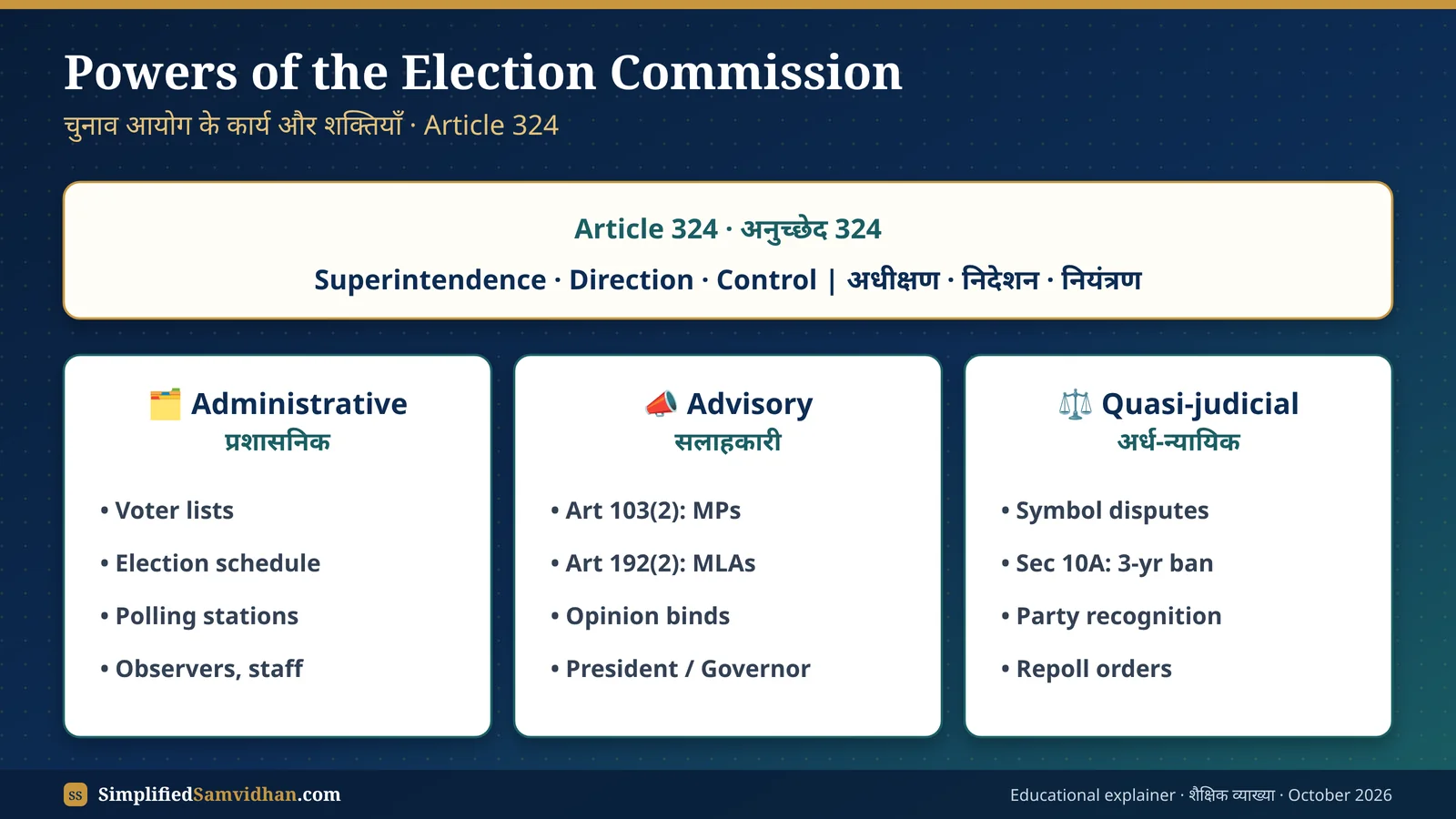
Read the notes →Administrative, advisory and quasi-judicial powers under Article 324, party symbols, repolls, landmark cases and the limits on the Commission.
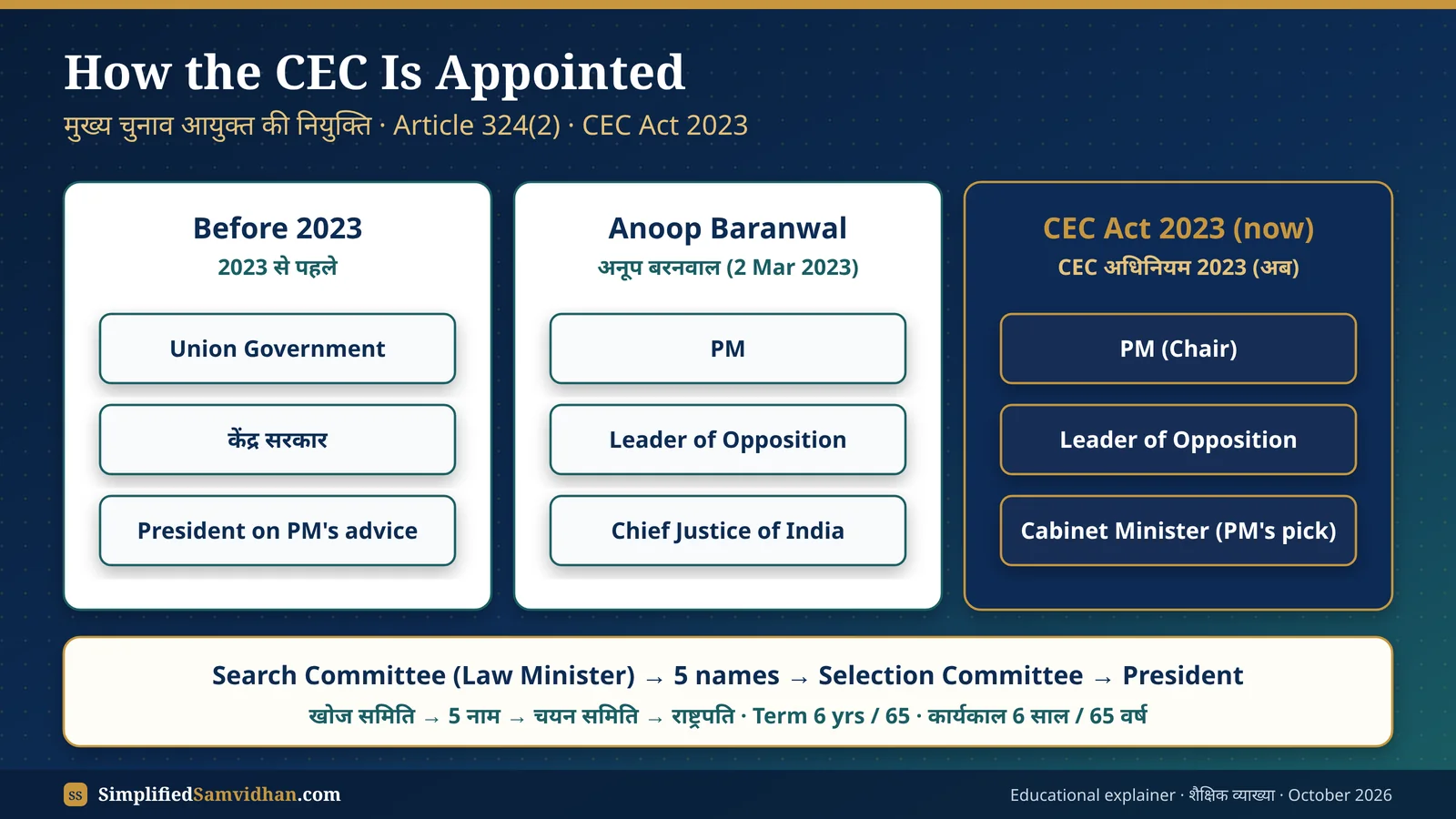
Read the notes →Article 324(2), the Anoop Baranwal ruling, the Search and Selection Committees of the 2023 Act, and the case now headed to a Constitution Bench.
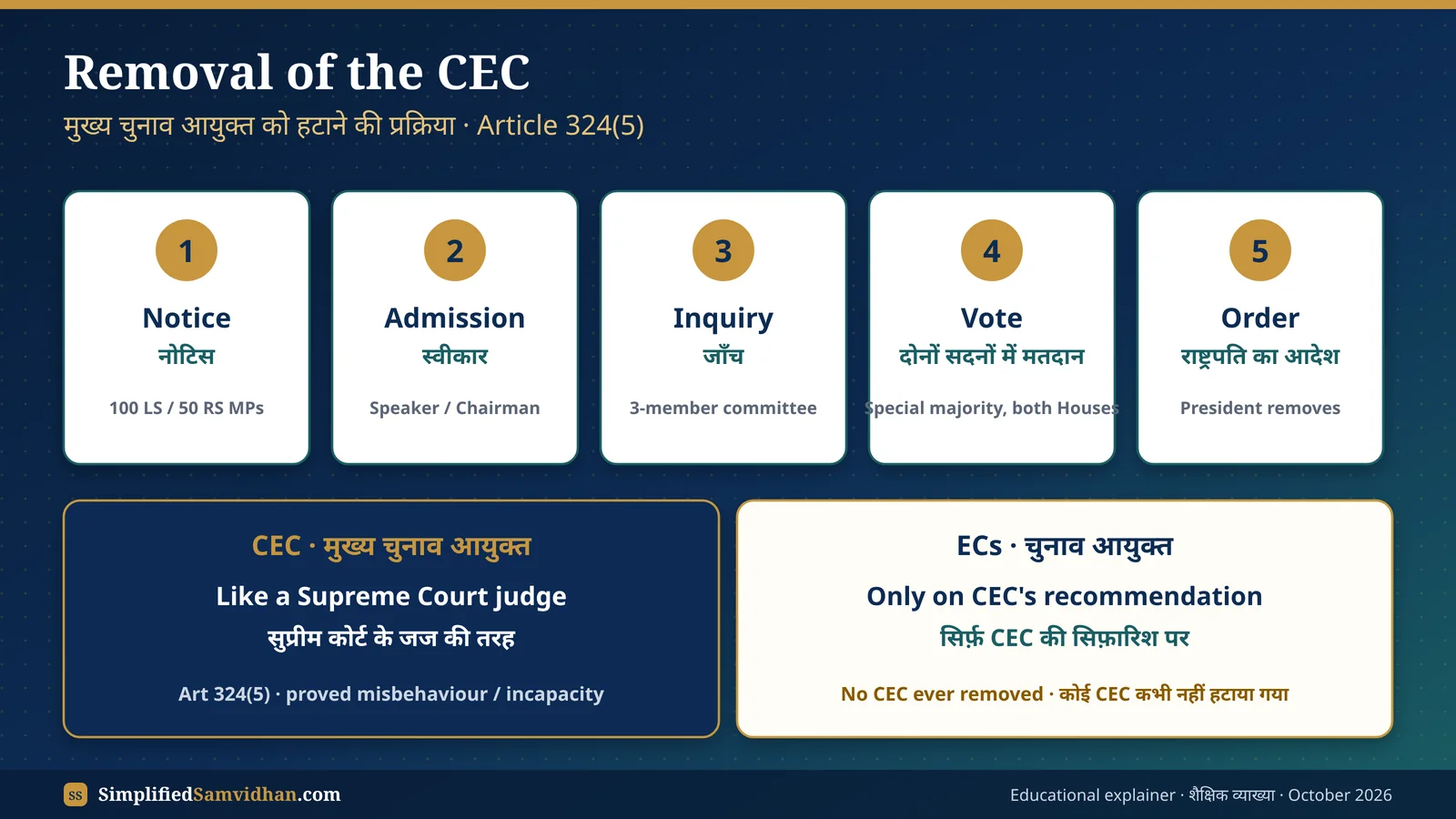
Read the notes →Article 324(5), the judge-like removal process, the weaker shield of Election Commissioners, independence debates and the 2026 notices.
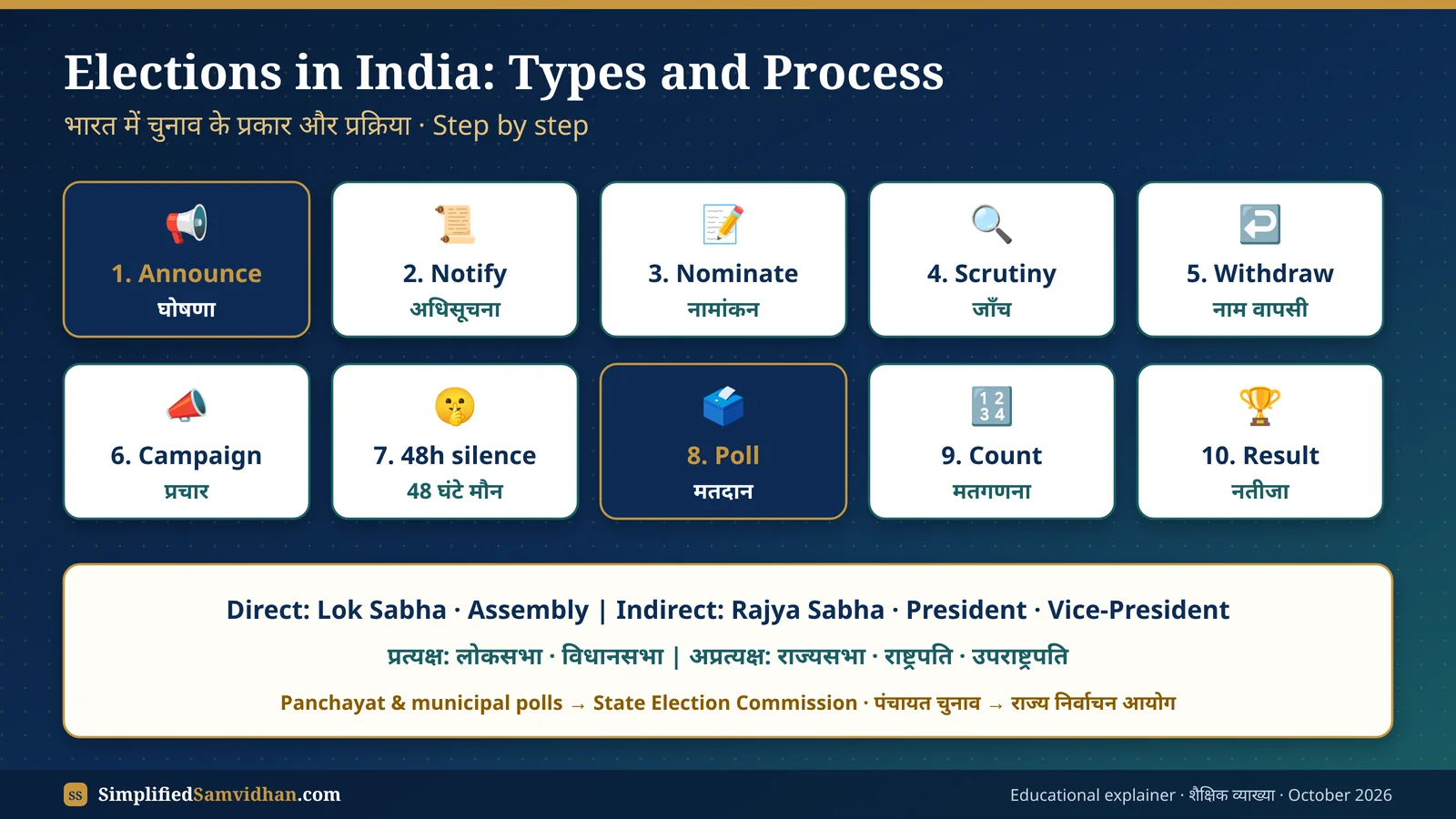
Read the notes →Direct and indirect elections, who votes in each, and every step from announcement to result, with FPTP and STV compared.
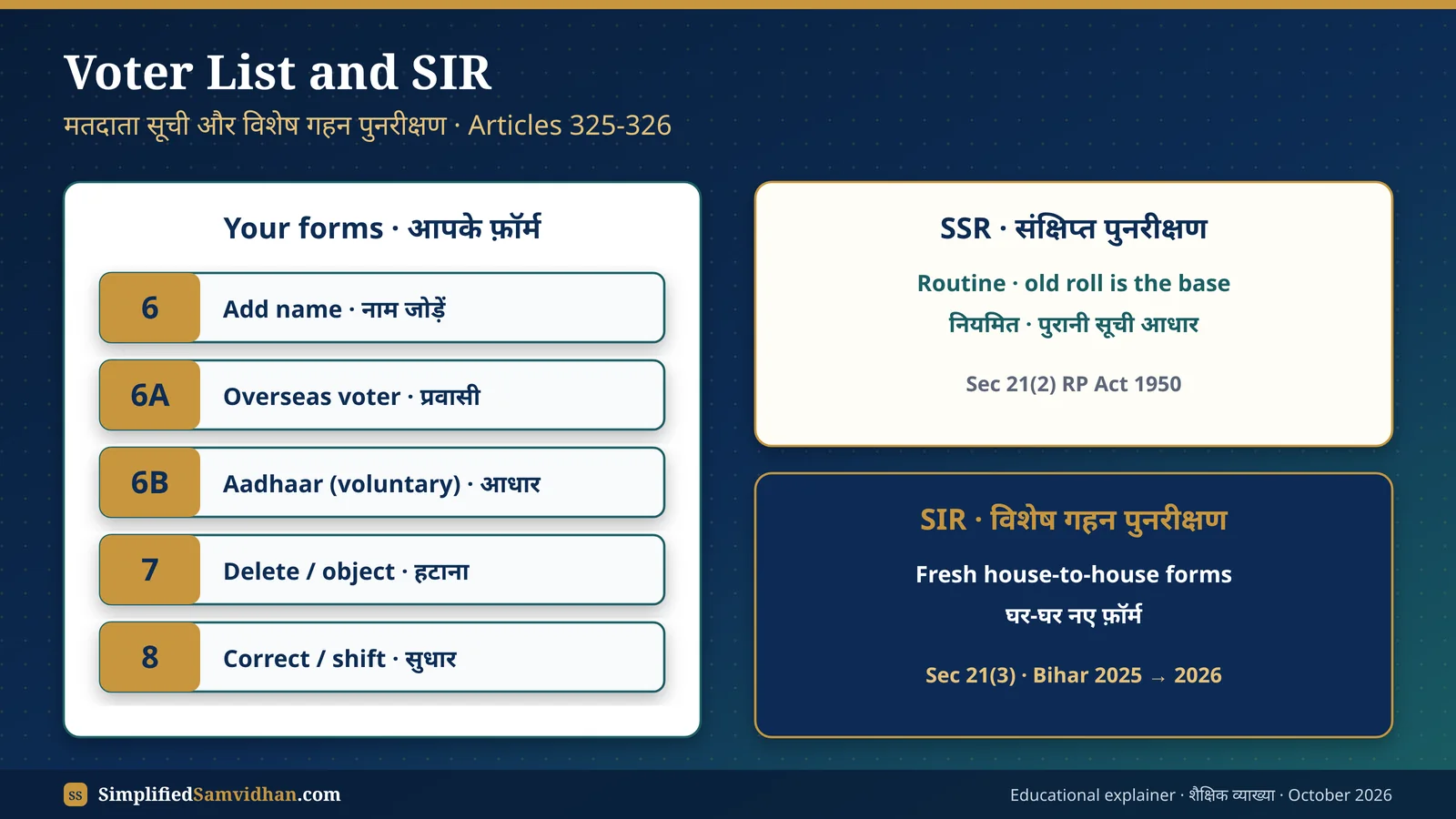
Read the notes →Eligibility under Articles 325-326, Forms 6, 7 and 8, the difference between SSR and SIR, and a neutral timeline of the SIR since 2025.
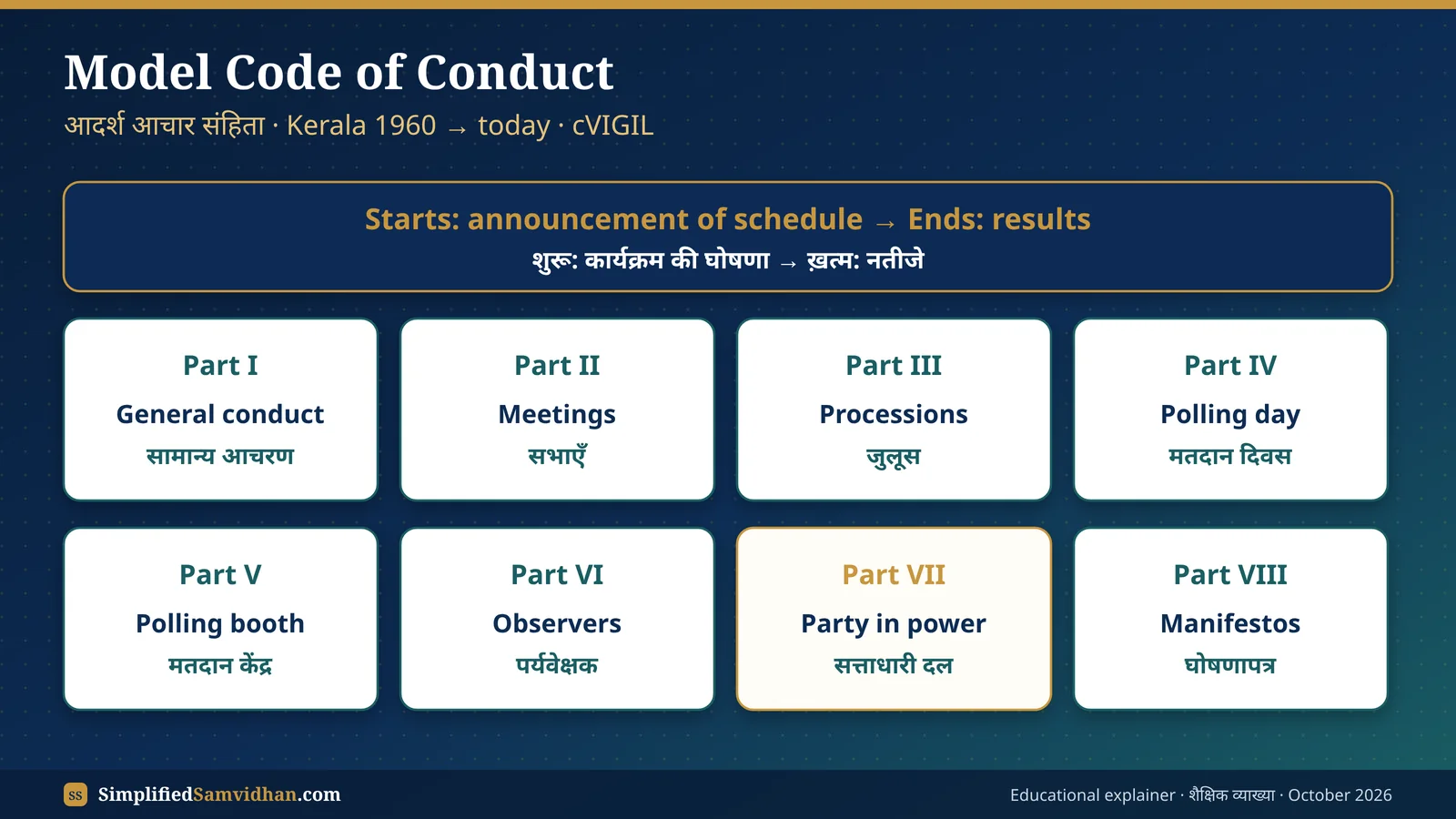
Read the notes →When the Code starts, its eight parts, rules for the government, its history since 1960, cVIGIL and how it is enforced without a law.
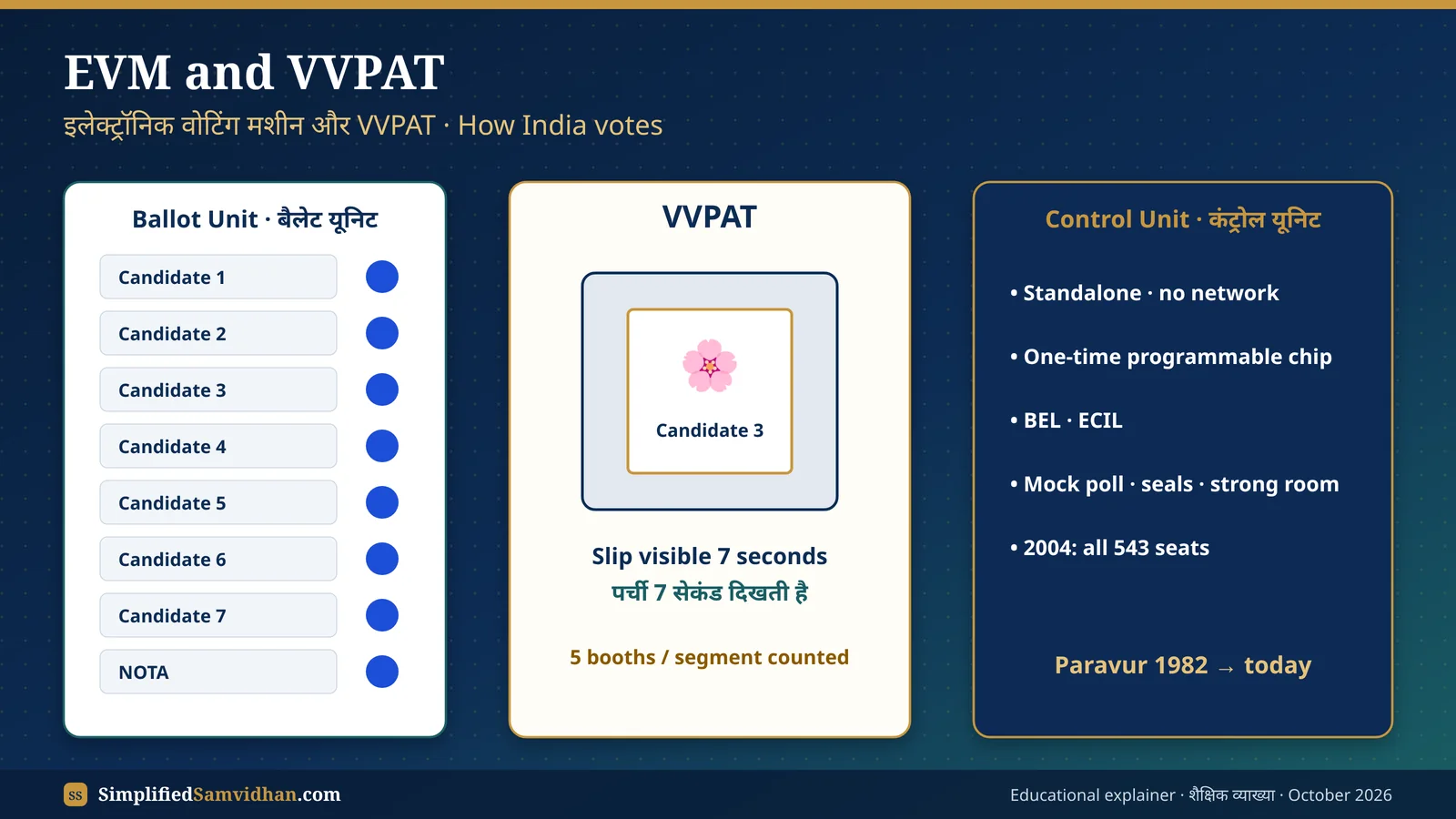
Read the notes →Ballot unit, control unit, VVPAT, safeguards, the history from 1982 and the key Supreme Court rulings of 2013, 2019 and 2024.
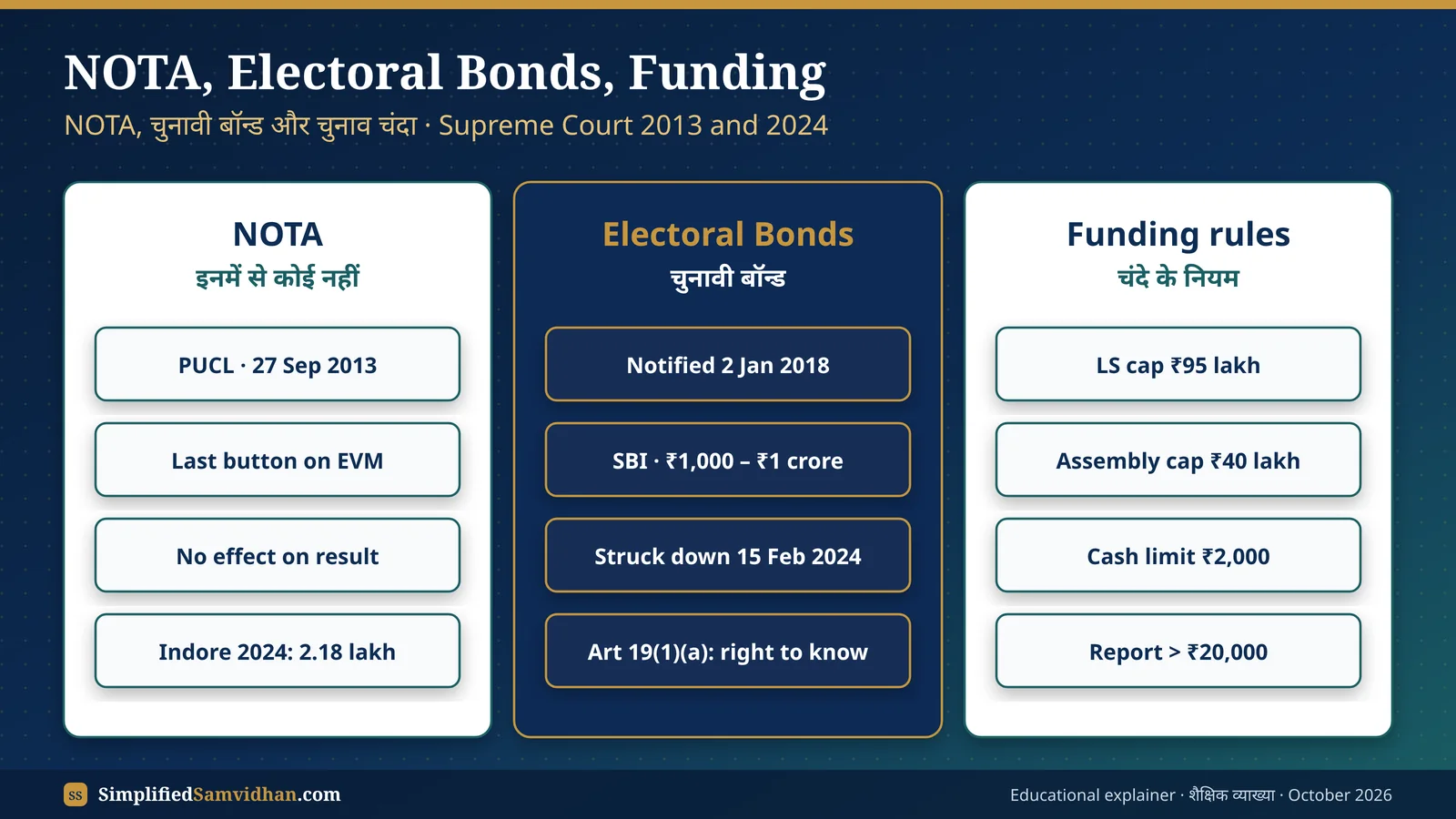
Read the notes →Why NOTA exists and what it cannot do, how electoral bonds worked and why the Supreme Court struck them down, and today's spending and donation rules.
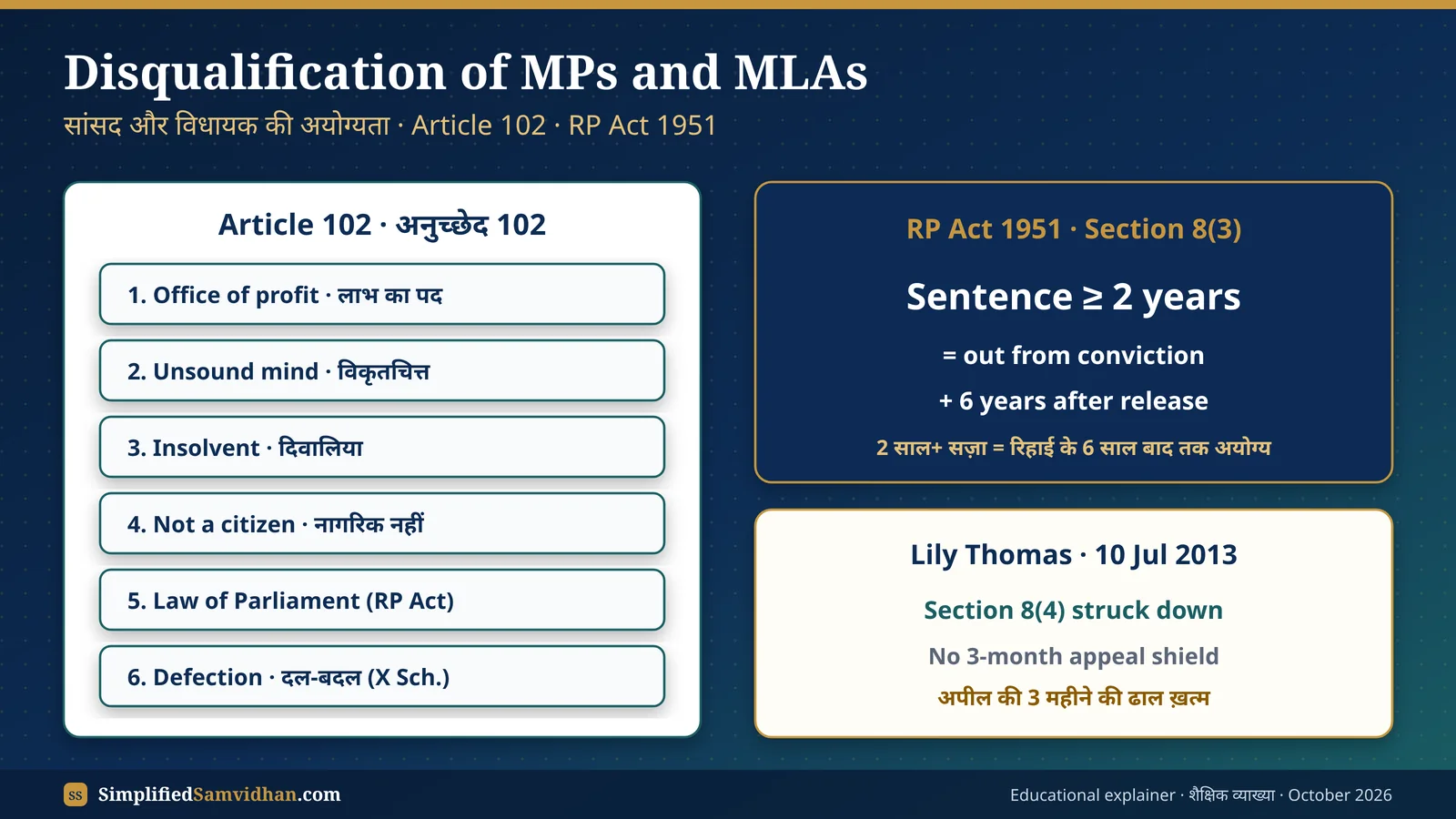
Read the notes →Articles 102 and 191, office of profit, Section 8 and Lily Thomas, who decides each case, and the rules on criminal candidates.
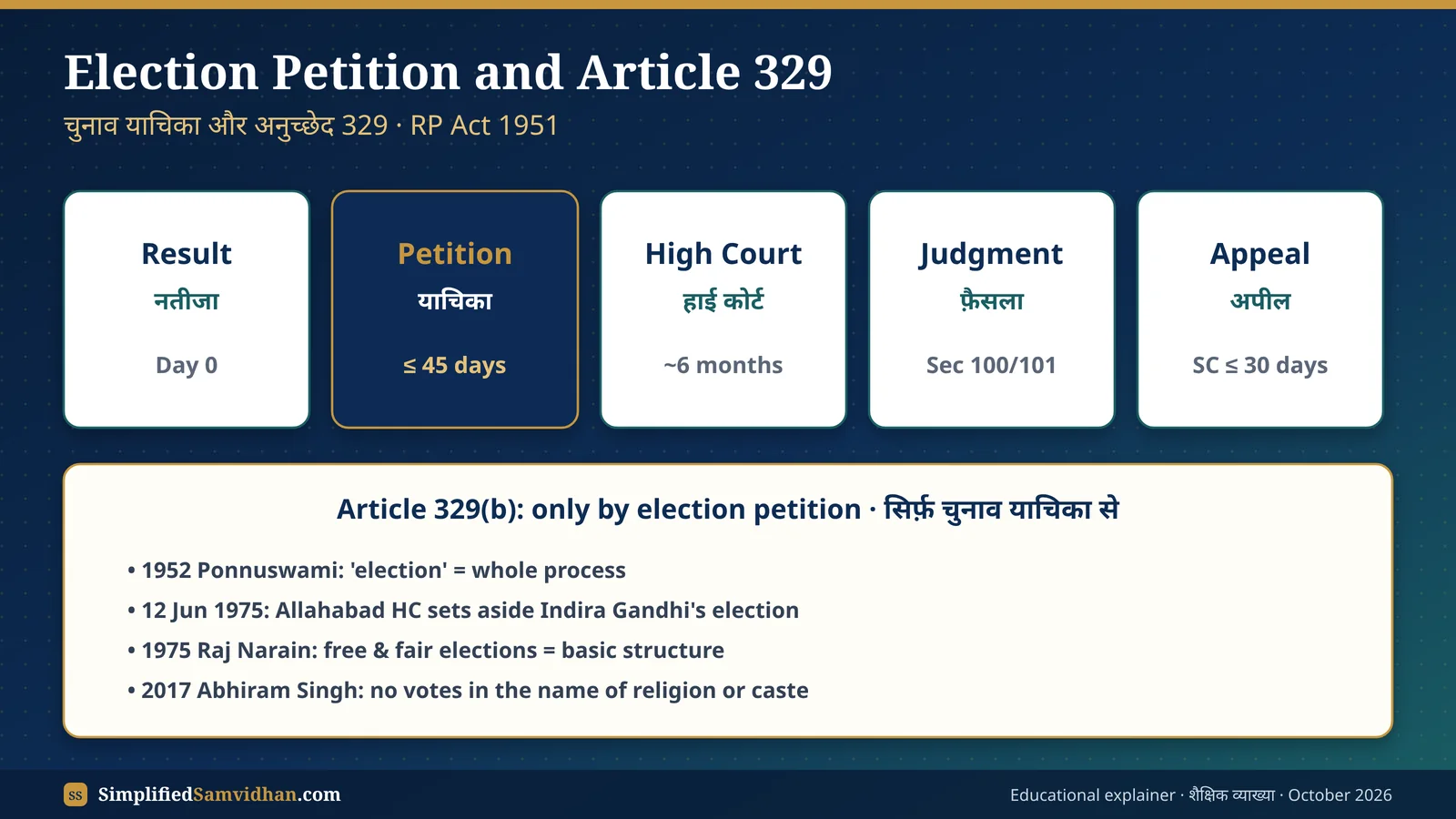
Read the notes →The bar on courts during elections, the 45-day petition in the High Court, grounds and corrupt practices, and landmark election cases.
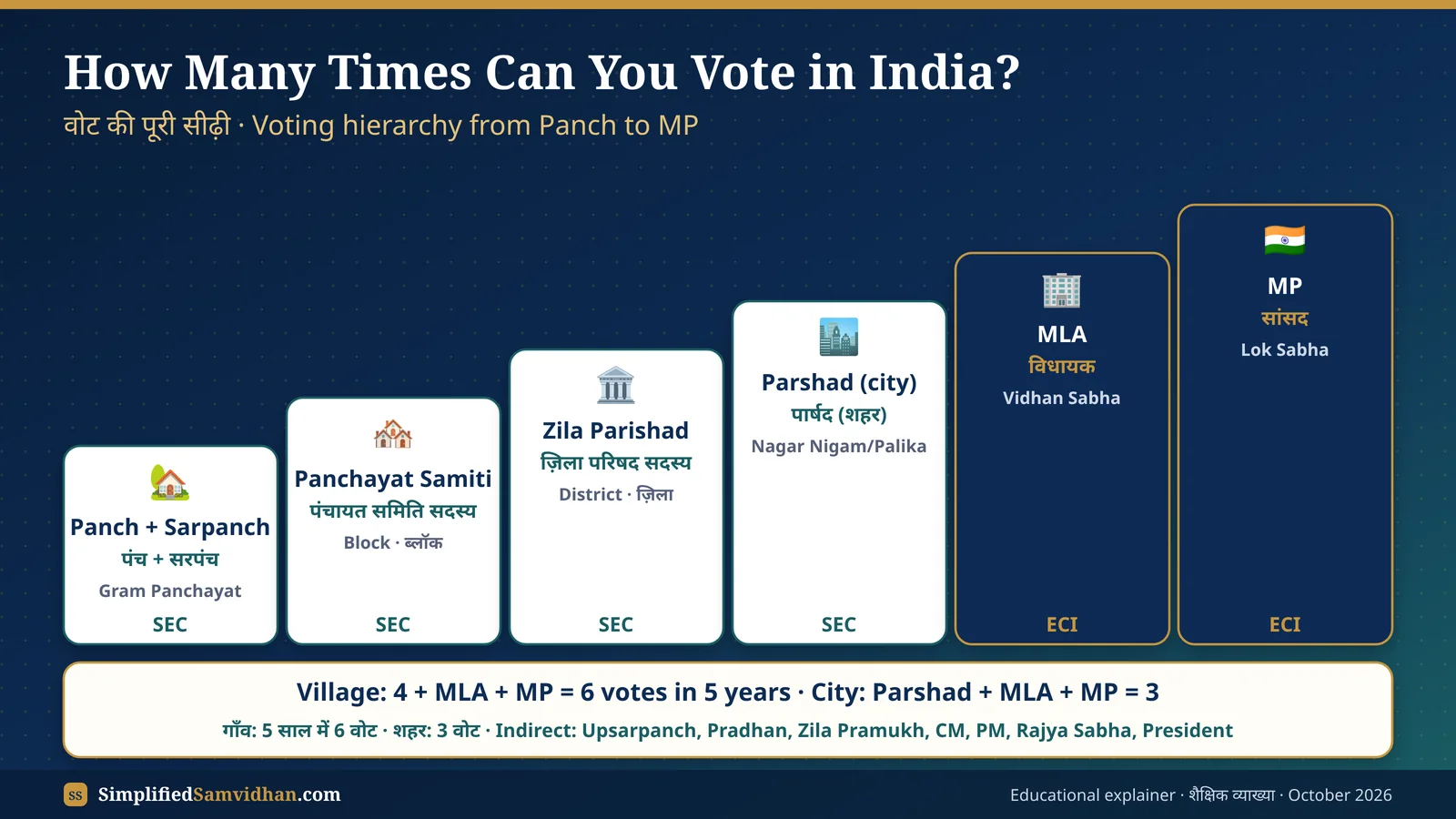
Read the notes →Ward panch, sarpanch, panchayat samiti, zila parishad, parshad, MLA and MP: one voter's five-year story, who elects whom, and who runs each election.
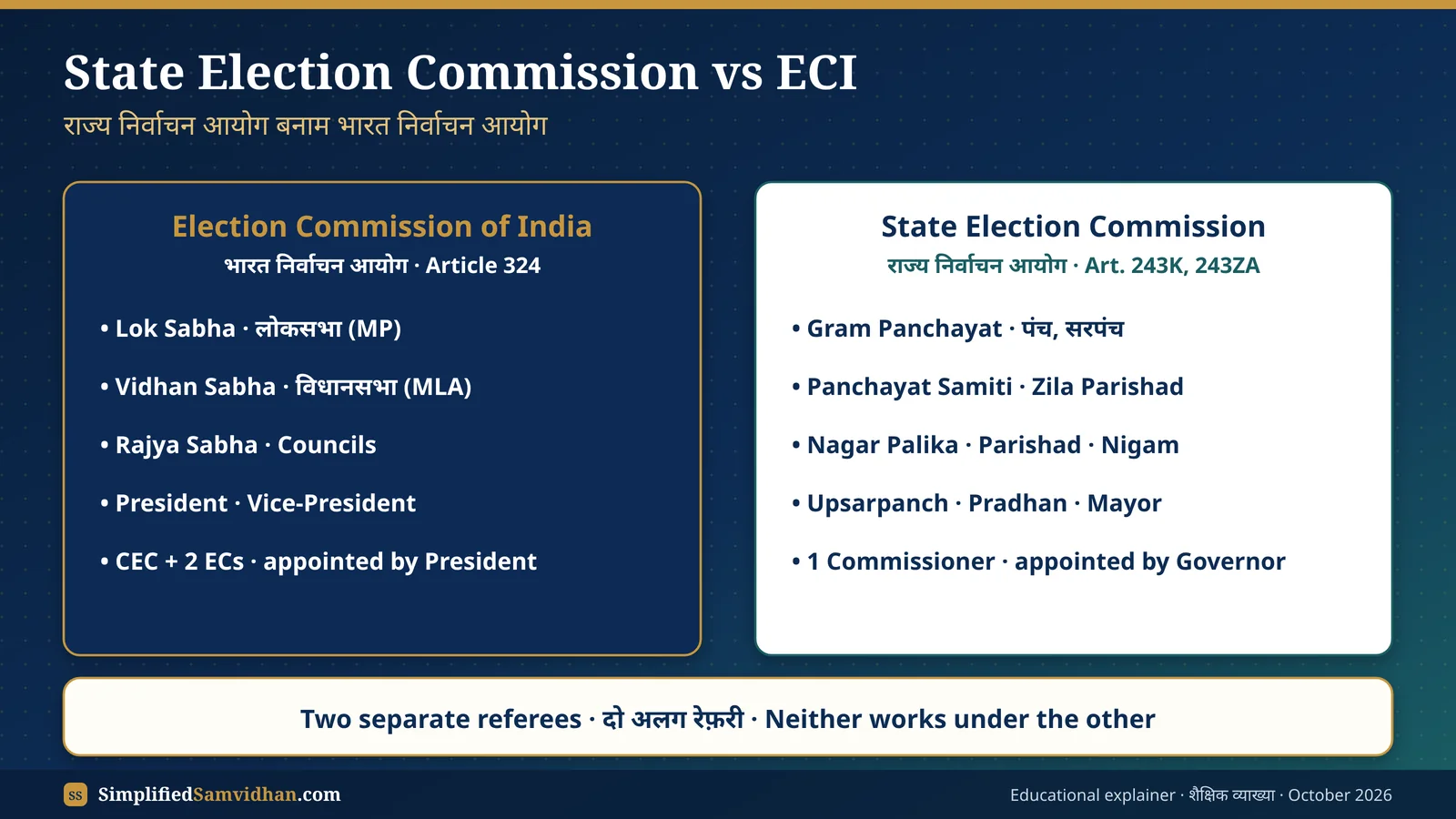
Read the notes →Articles 243K, 243ZA and 324 compared: who runs panchayat, municipal, Assembly and Lok Sabha polls, appointment, removal and key court cases.
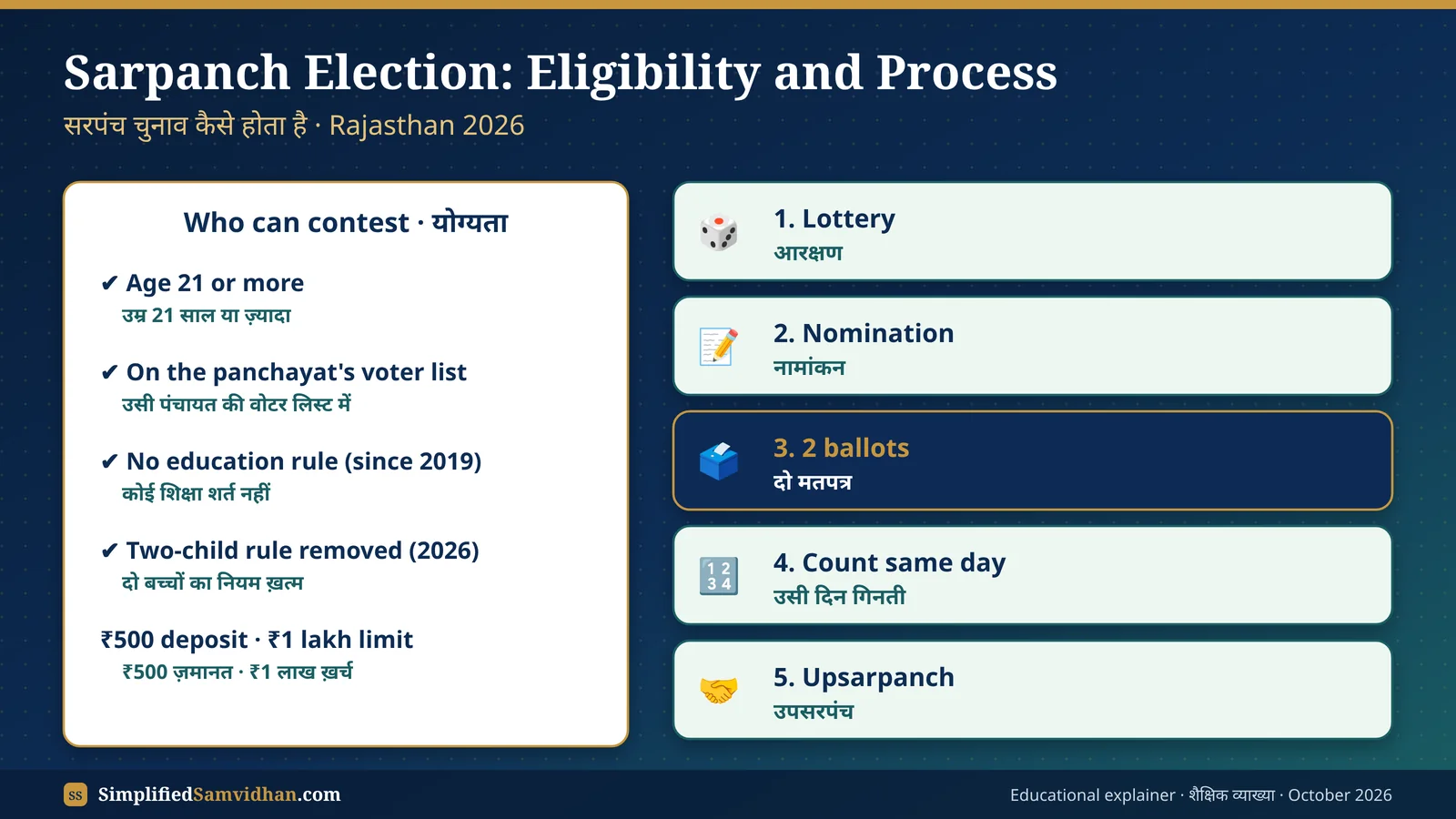
Read the notes →Age 21, no education rule, two-child norm removed, deposit, spending limit, two ballot papers, same-day counting and the upsarpanch poll.
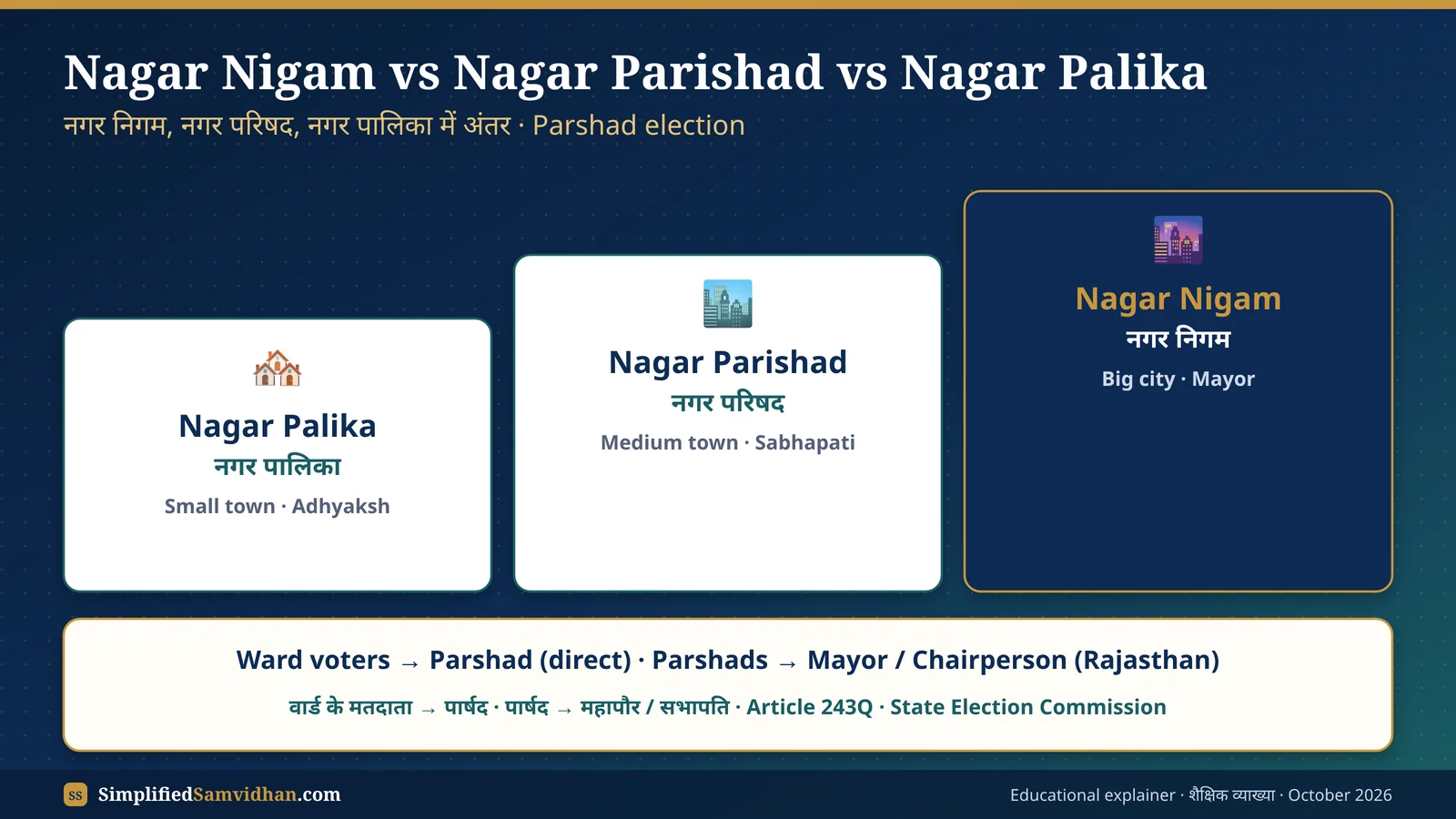
Read the notes →Three kinds of urban bodies under Article 243Q, how wards elect parshads, how mayors are chosen, and what a municipality does.
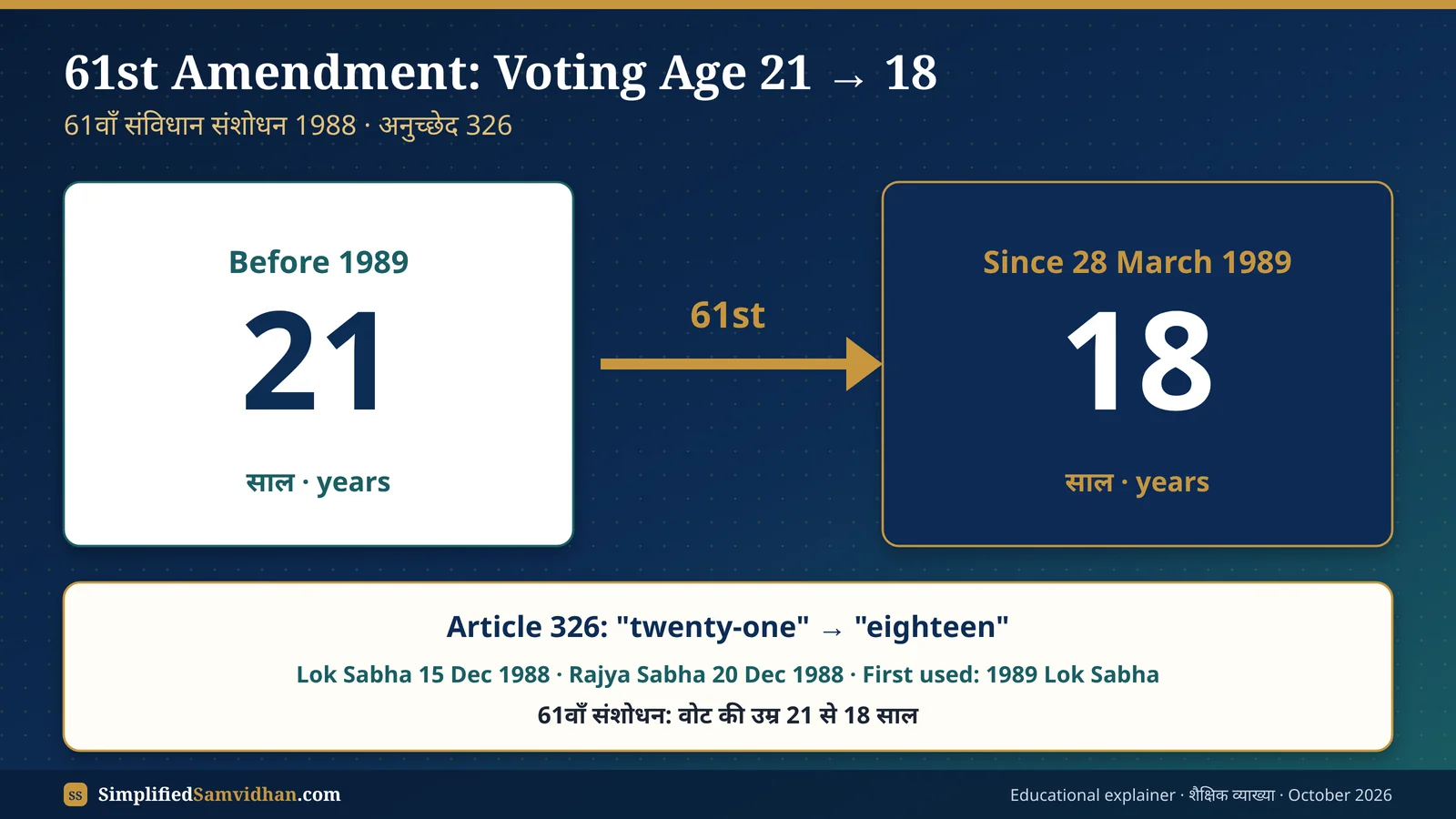
Read the notes →The one-word amendment to Article 326, its dates and story, the first 18-year-old voters of 1989, and today's ages to vote and contest.
Read the notes →The Election Commission of India conducts elections to Parliament, State Legislatures and the offices of President and Vice-President under Article 324. Panchayat and municipal elections are conducted by the State Election Commissions (Articles 243K and 243ZA).
Gyanesh Kumar is the 26th Chief Election Commissioner. He took charge on 19 February 2025 and his term runs till 26 January 2029. The other two Election Commissioners are Sukhbir Singh Sandhu and Vivek Joshi.
Sukumar Sen, an ICS officer, from 21 March 1950 to 19 December 1958. He conducted the first two general elections of 1951-52 and 1957.
Yes. It is created by Article 324 of the Constitution, which falls in Part XV (Elections), Articles 324 to 329.