What Is a Midterm Election in the US
The election held halfway through a President's term: who is elected, why the President's party usually loses, and the 2026 result.
Read the notes →Who votes for what in America, how the President is really chosen, why the 3 November 2026 midterms changed Congress, and how all of it compares with India. Read in order, in English or Hindi.
Start with what midterm elections are and the 2026 results (House, Senate, governors). Then learn the system: the Senate and House, the Electoral College and the President, the Vice President, primaries, parties, how voting works and the governors. Notes 16 to 18 cover the US Constitution, its voting-rights amendments and the Supreme Court. Notes 19 and 20 compare the Indian and US systems, a favourite of UPSC GS-2 ("comparison of the Indian constitutional scheme with that of other countries"). Every page has the official text, an In Simple Words box, one-line revision points and MCQs.
The election held halfway through a President's term: who is elected, why the President's party usually loses, and the 2026 result.
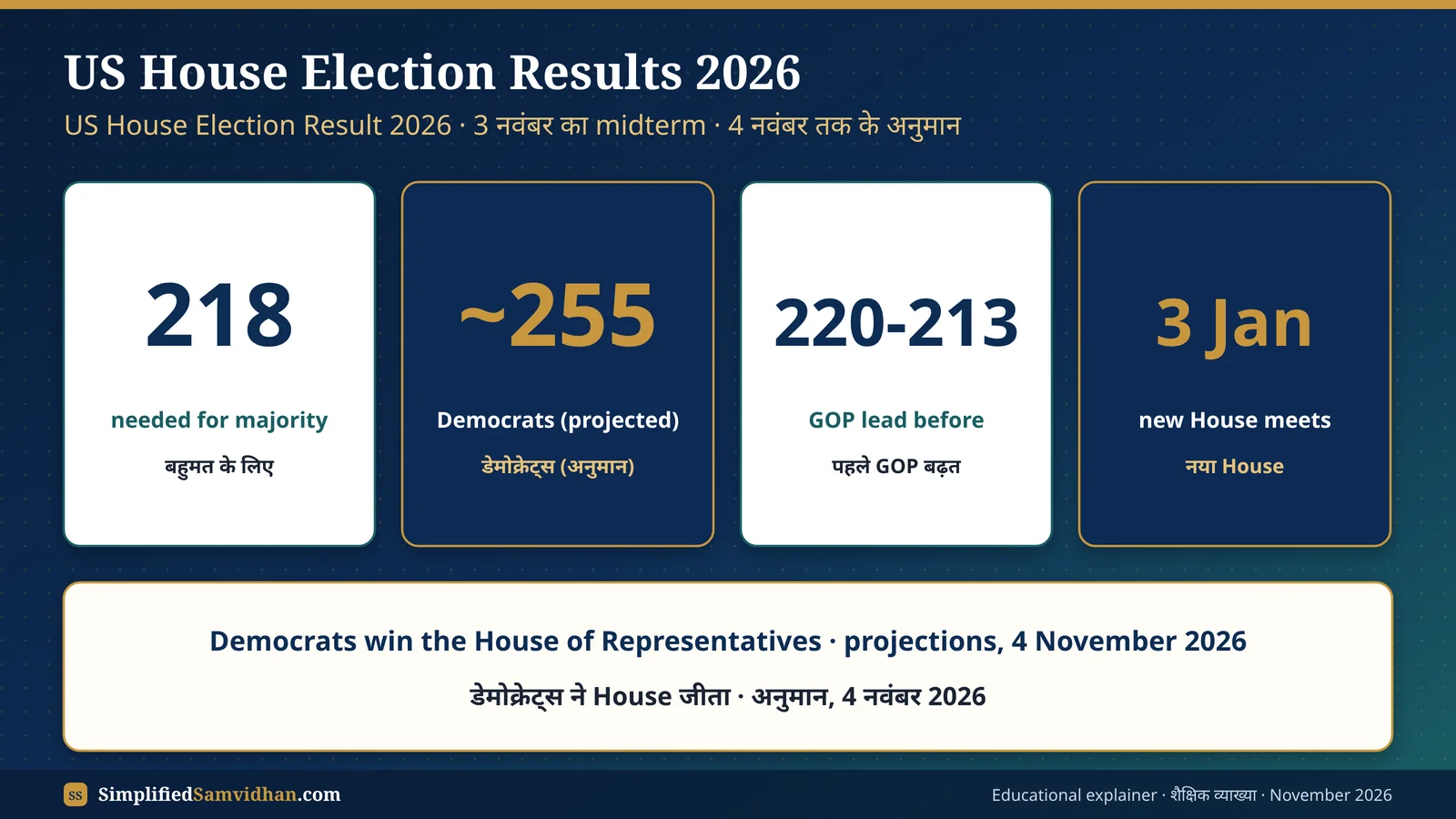
Read the notes →Democrats win the House: seat count, projections, the seats that flipped and the new Speaker from 3 January 2027.
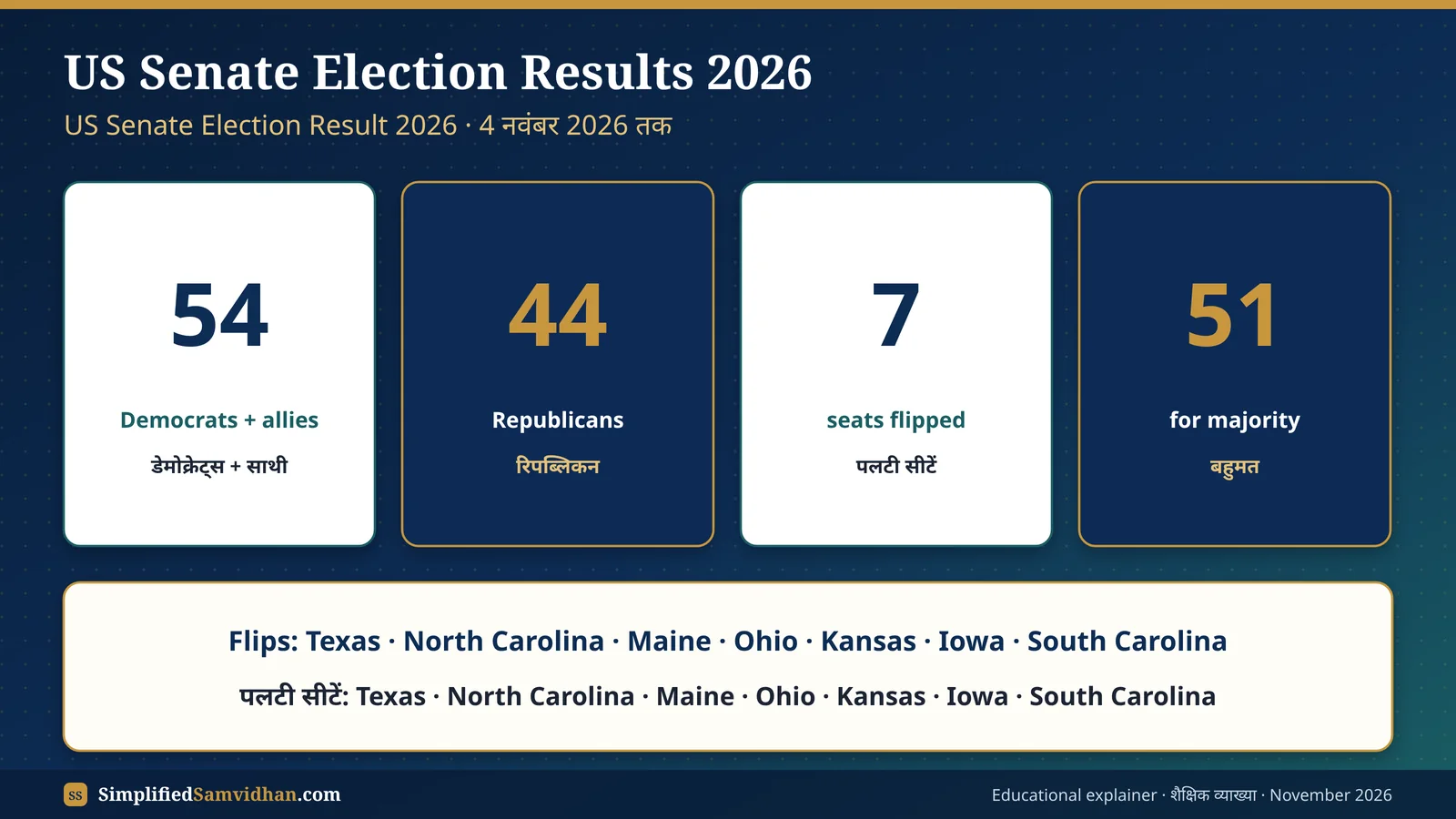
Read the notes →Democrats win the Senate 54-44: all seven flips, every key race with winner and vote share, and why it matters.
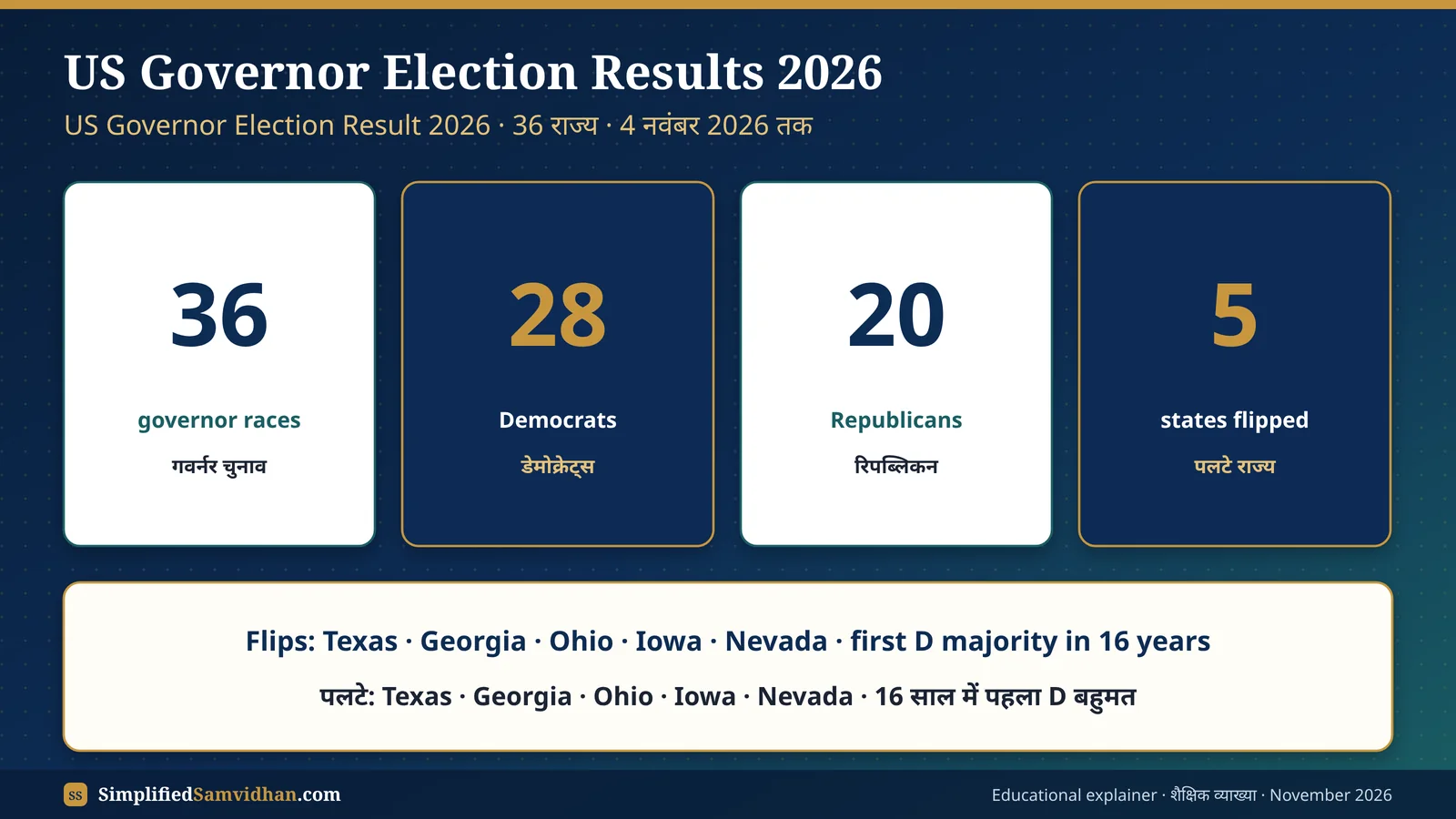
Read the notes →Democrats win most governorships: Texas, Georgia, Ohio, Iowa and Nevada flip; winners and vote shares state by state.
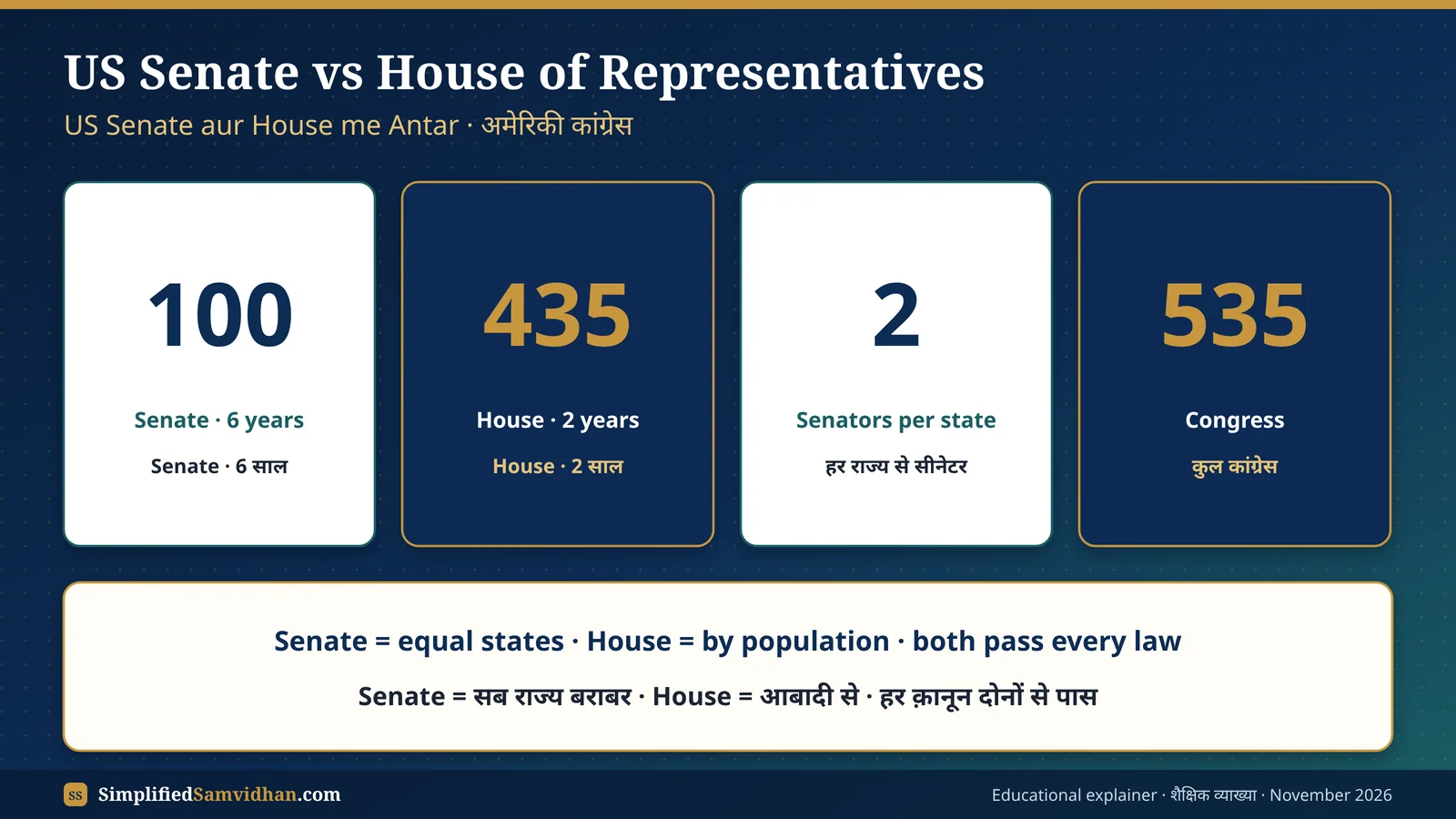
Read the notes →100 vs 435 members, 6 vs 2 years, who does what, how a bill becomes law, and the Rajya Sabha and Lok Sabha comparison.
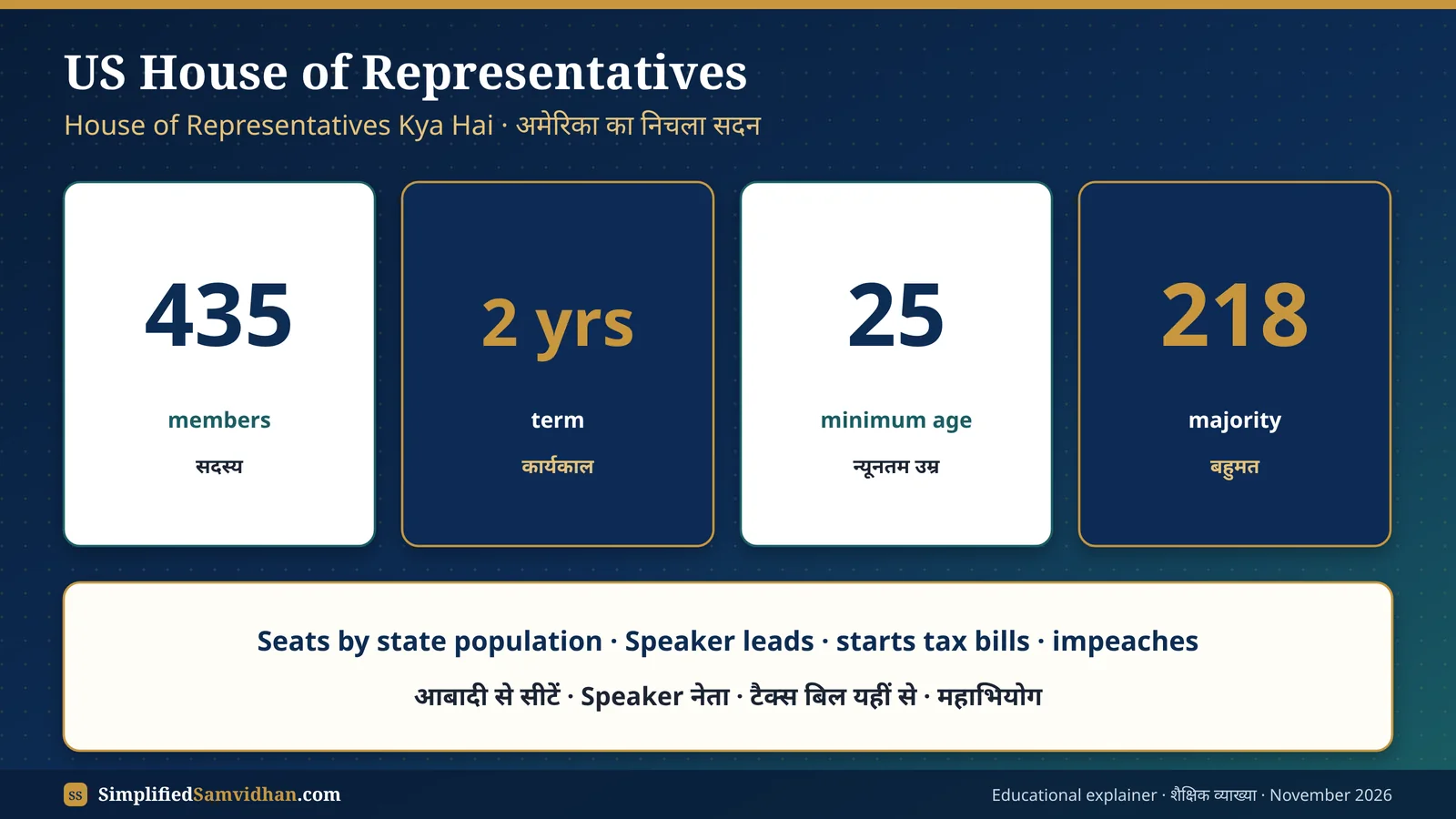
Read the notes →435 seats by population, 2-year terms, the Speaker, money bills and impeachment, and how it compares with the Lok Sabha.
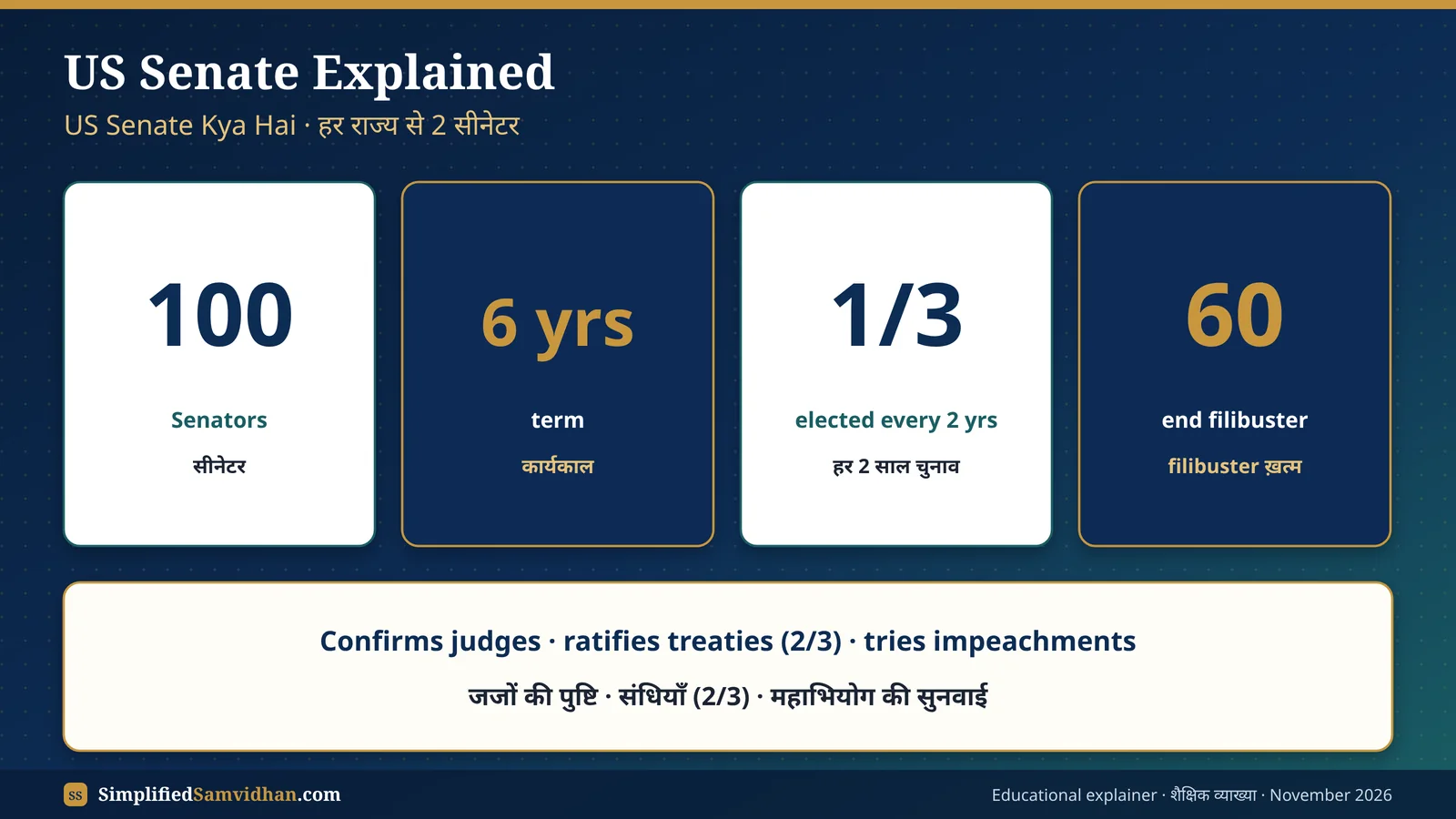
Read the notes →Two Senators per state, 6-year terms in three classes, the filibuster, treaties and confirmations, and the Rajya Sabha comparison.
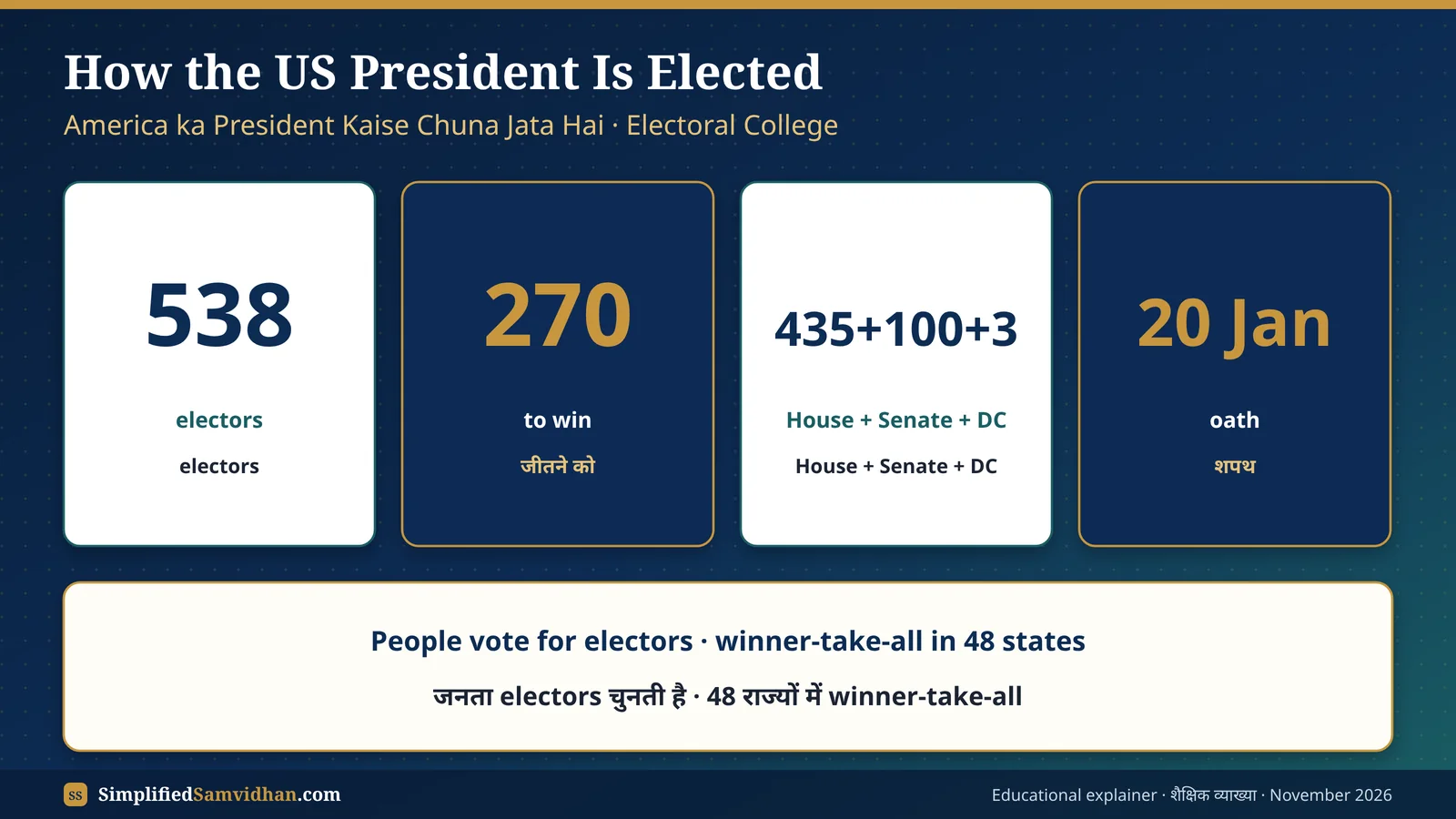
Read the notes →538 electors, 270 to win, winner-take-all, the six steps from primaries to 20 January, and the 2000 and 2016 surprises.
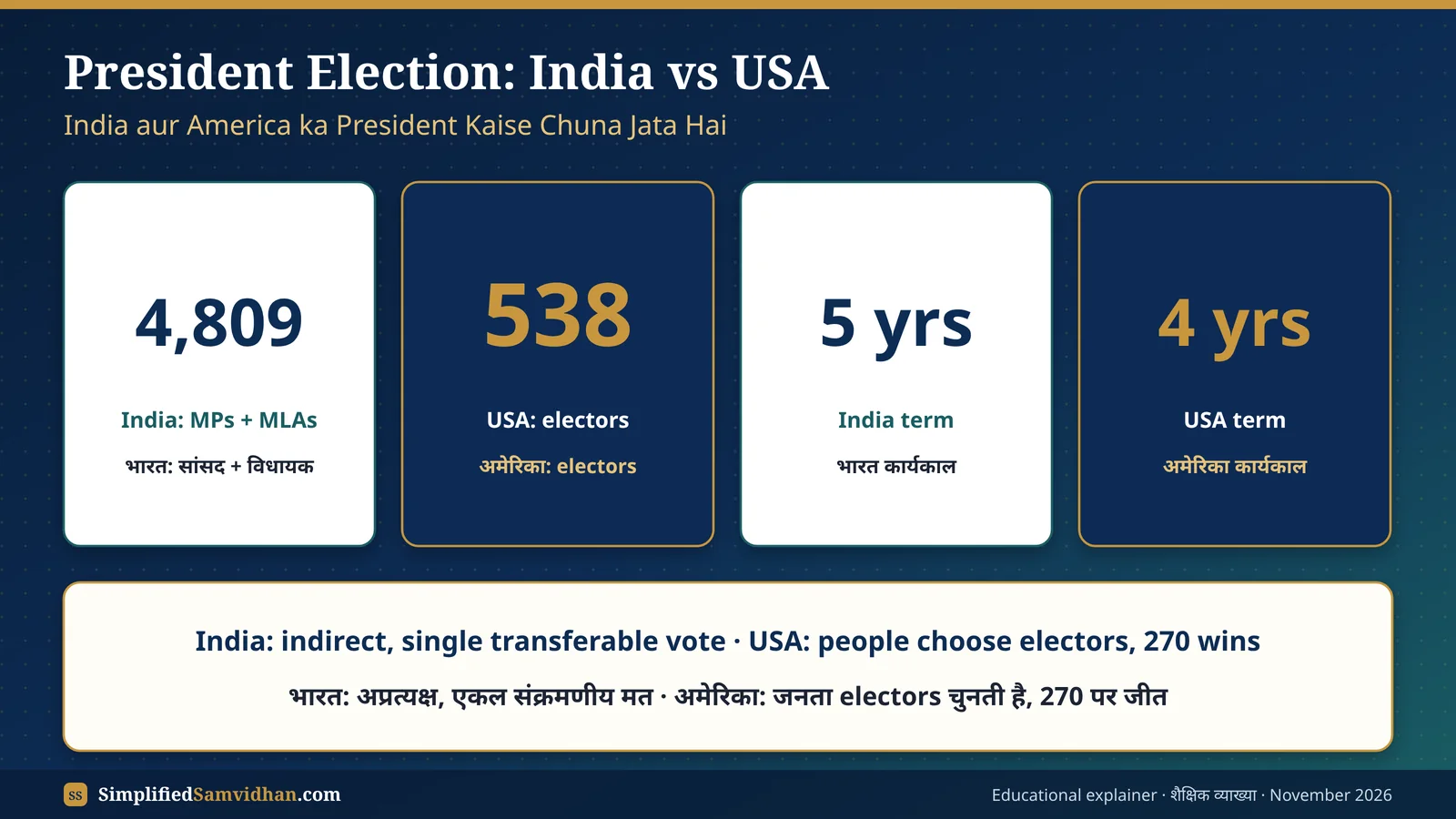
Read the notes →Indirect election by MPs and MLAs vs Electoral College by the people: one simple comparison table, both processes and why they differ.
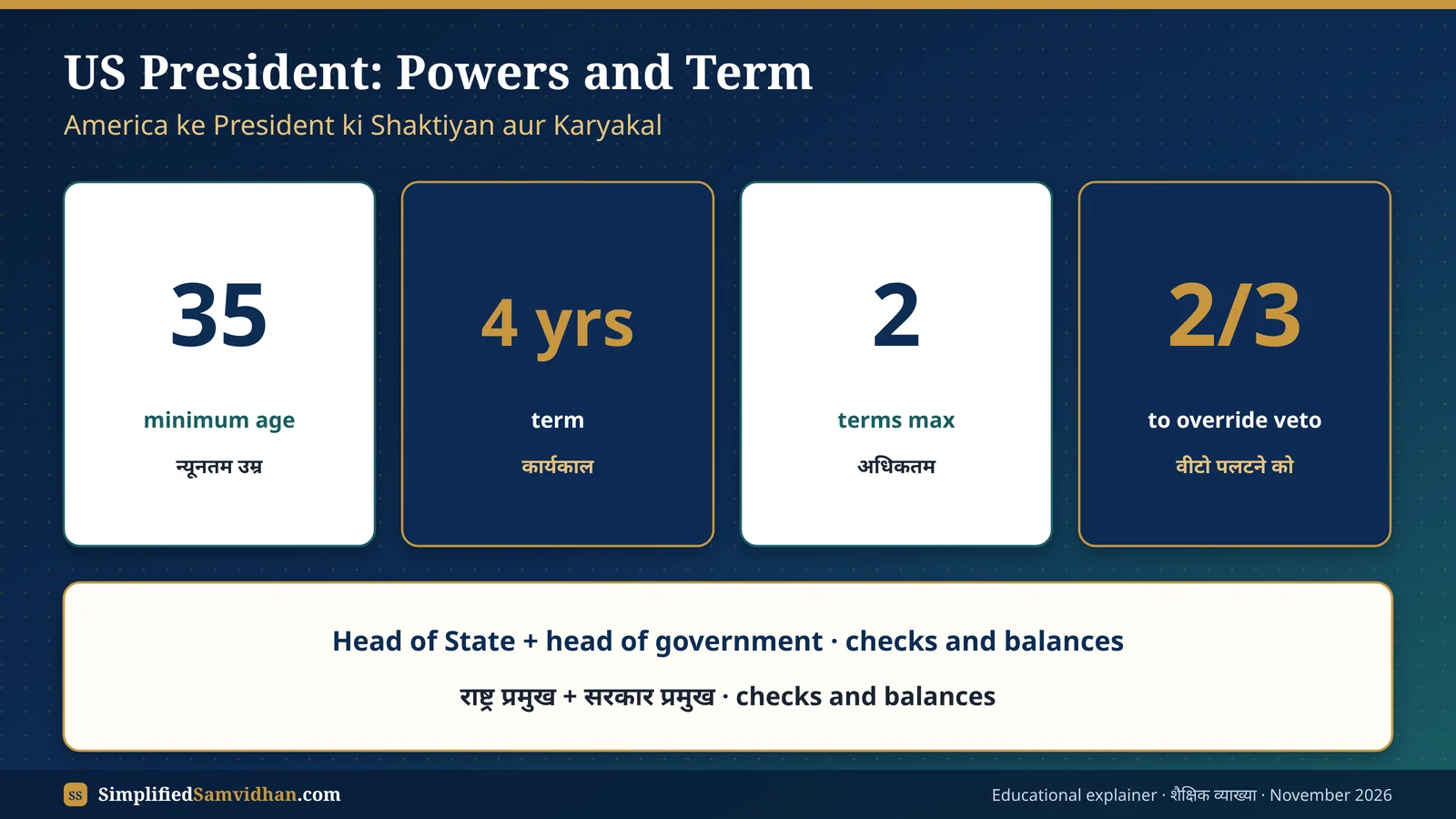
Read the notes →Who can run, the 4-year term and two-term limit, powers and checks, the line of succession, and the Indian President compared.
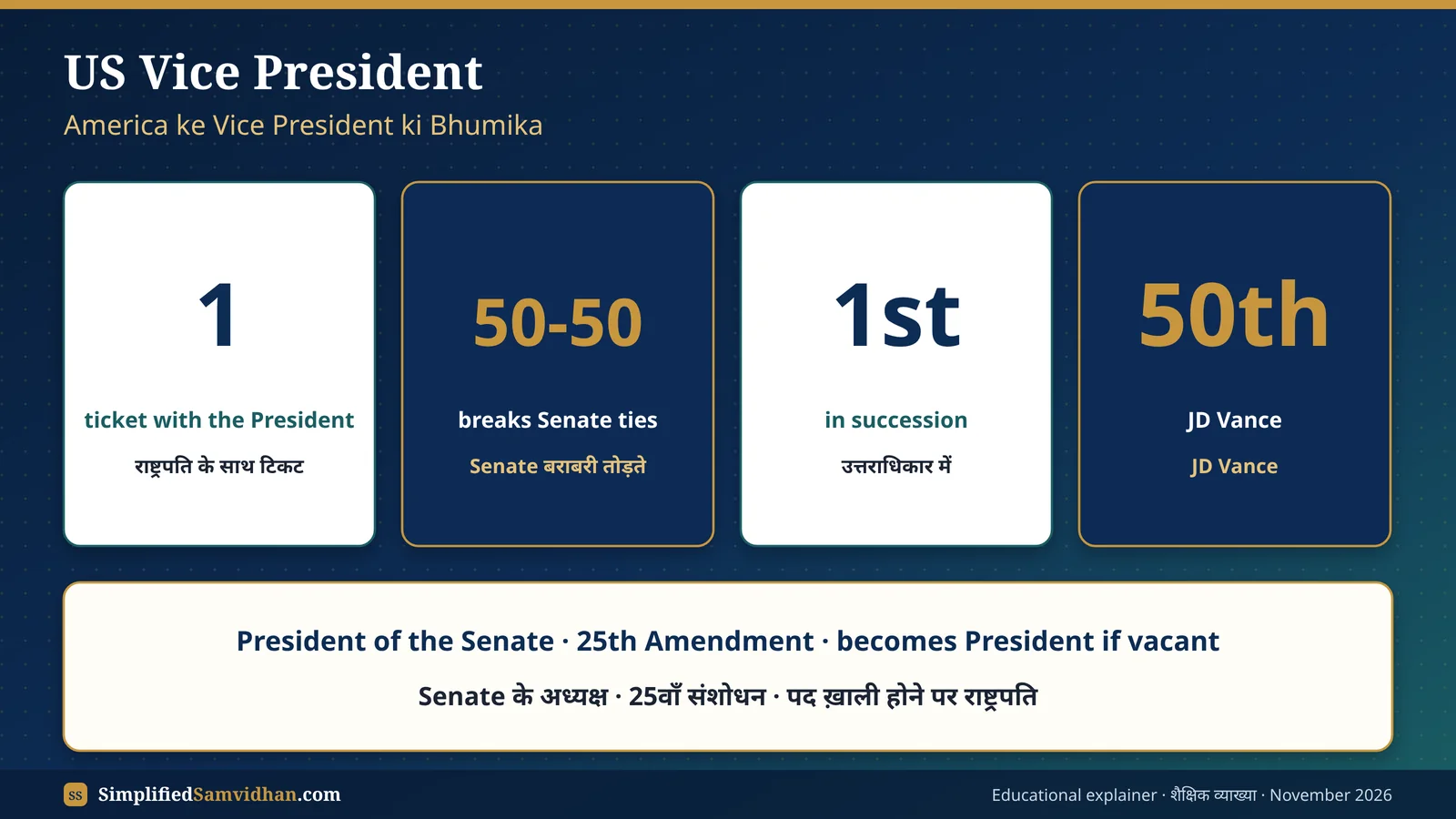
Read the notes →Joint ticket, Senate tie-breaker, the 25th Amendment and succession, and how India's Vice President differs.
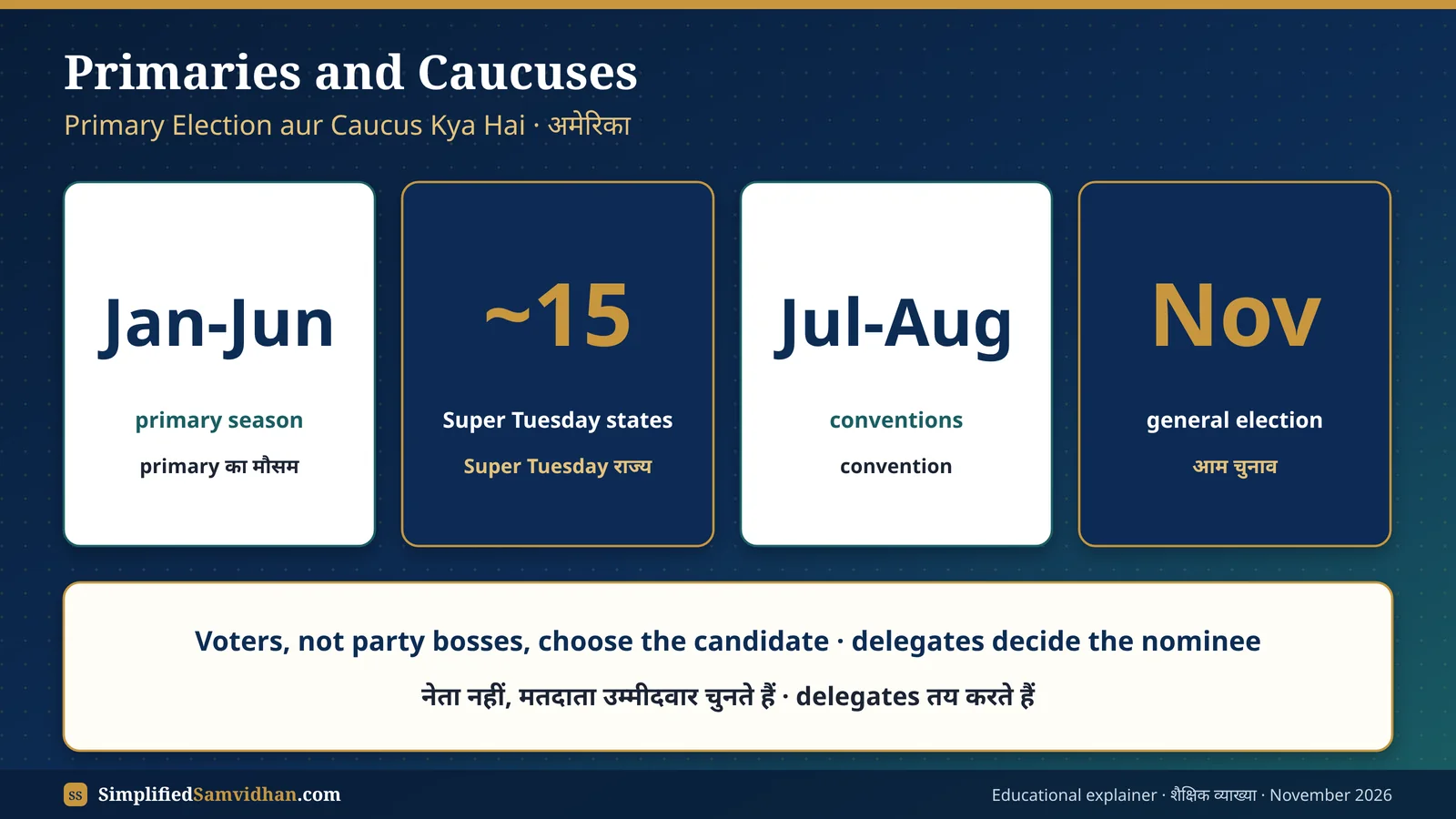
Read the notes →Primary vs caucus, open and closed primaries, the January-to-June calendar, Super Tuesday, delegates and conventions.
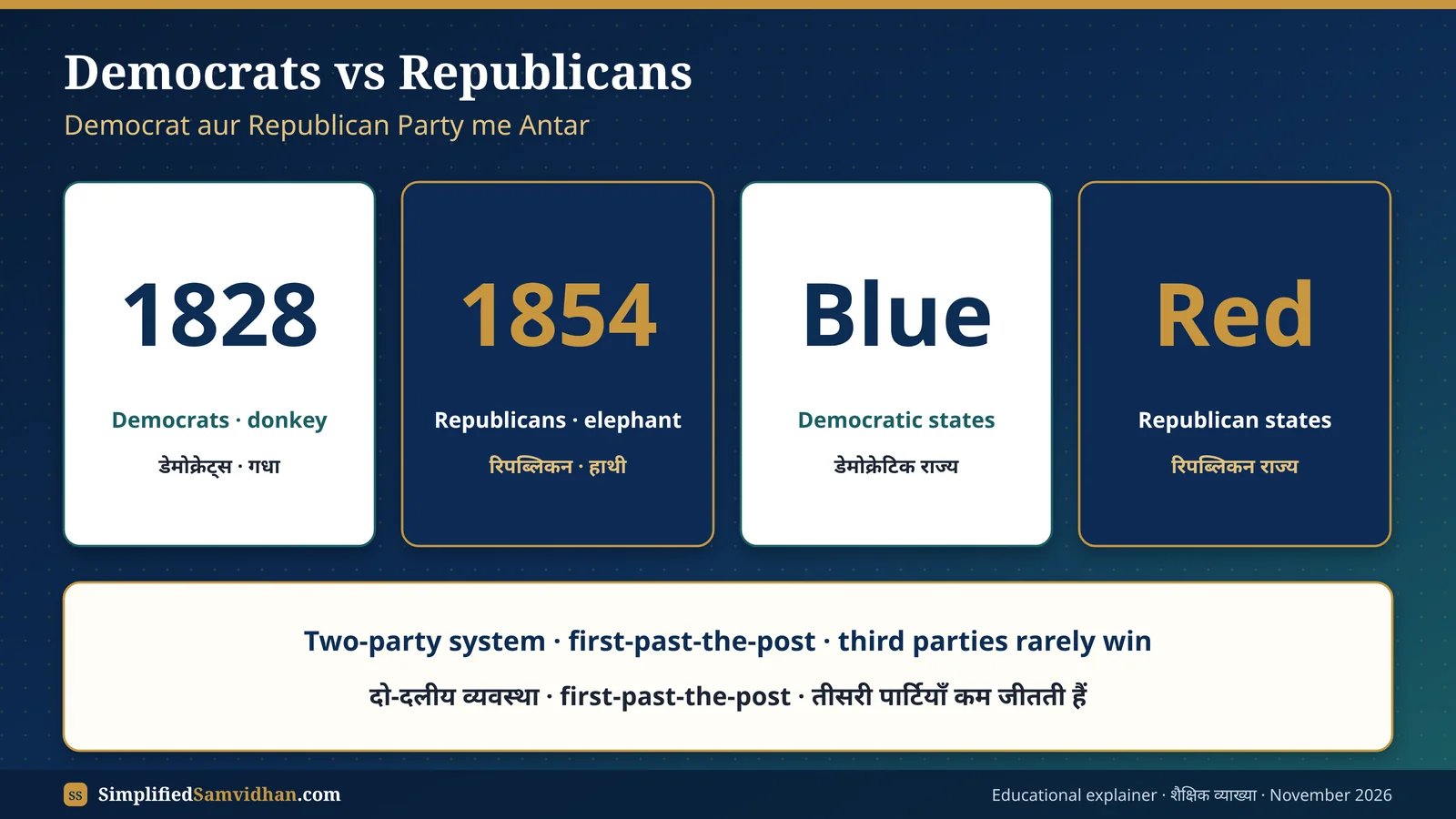
Read the notes →Founding, symbols, colours, beliefs and leaders of the two parties, why the US has a two-party system, and the third parties.
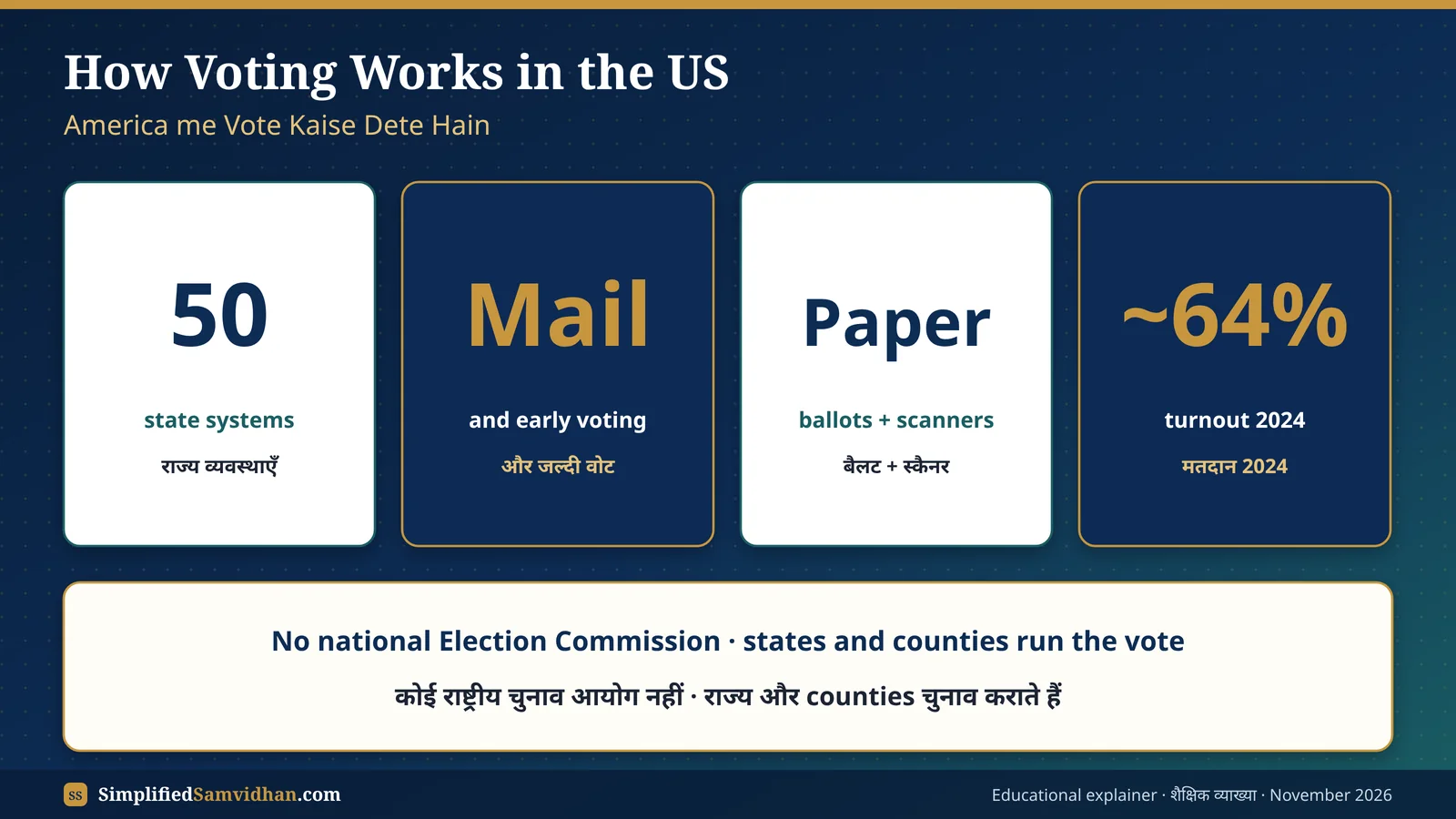
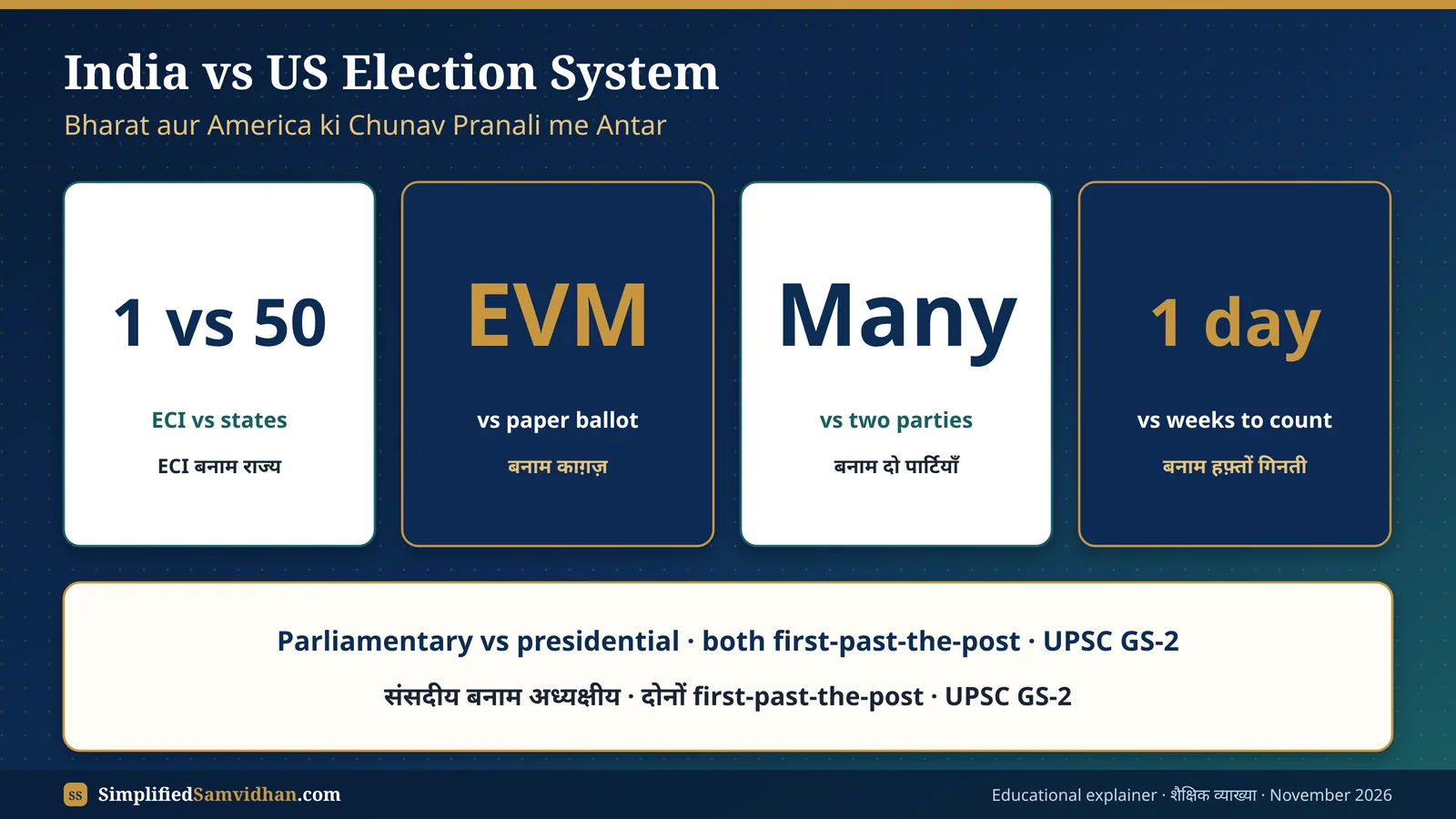
Read the notes →No Election Commission, 50 state systems, registration, mail and early voting, ID rules and counting, compared with India.
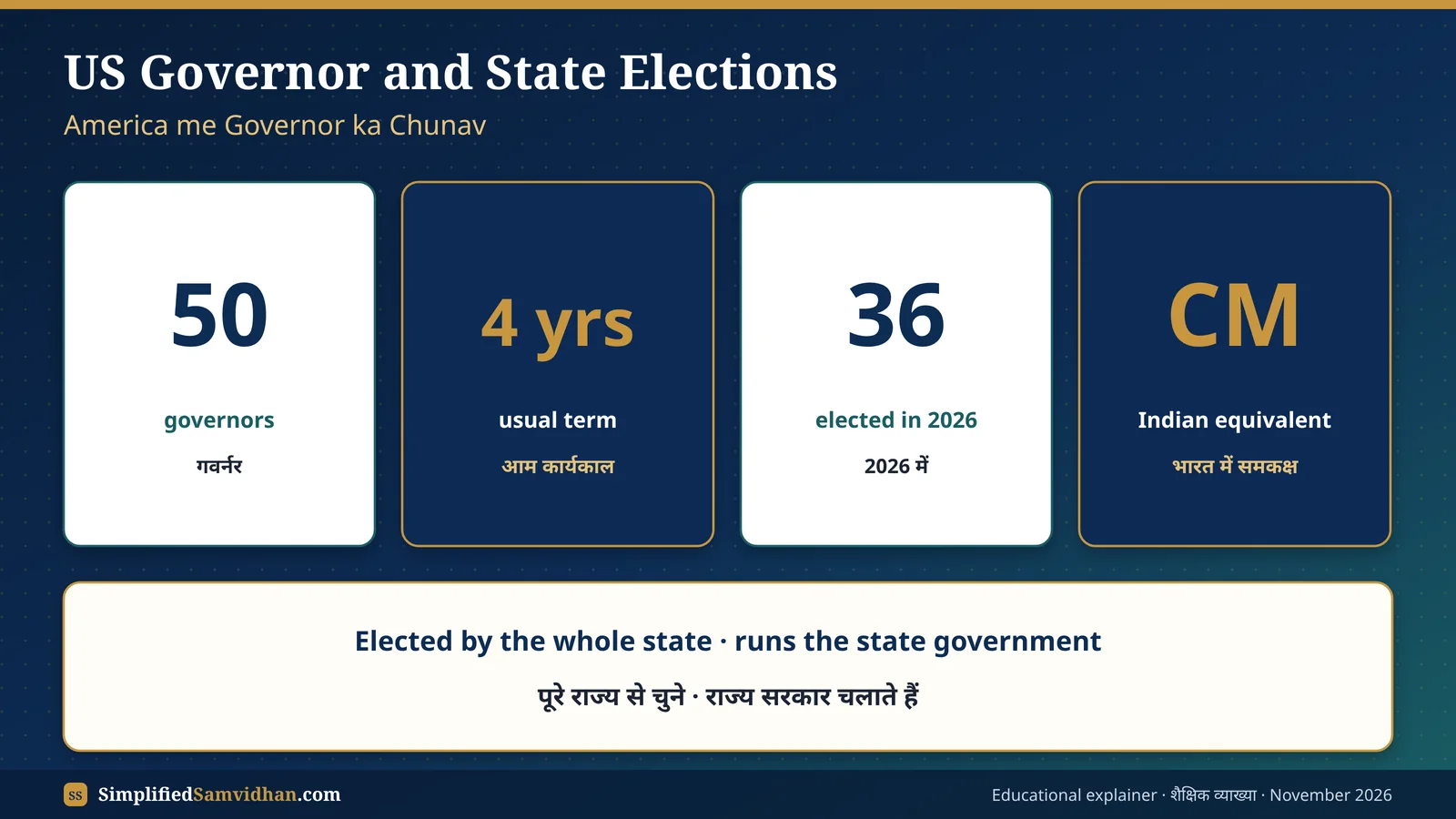
Read the notes →Who governors are, their terms and powers, state legislatures and ballot measures, and the Indian Governor and CM compared.
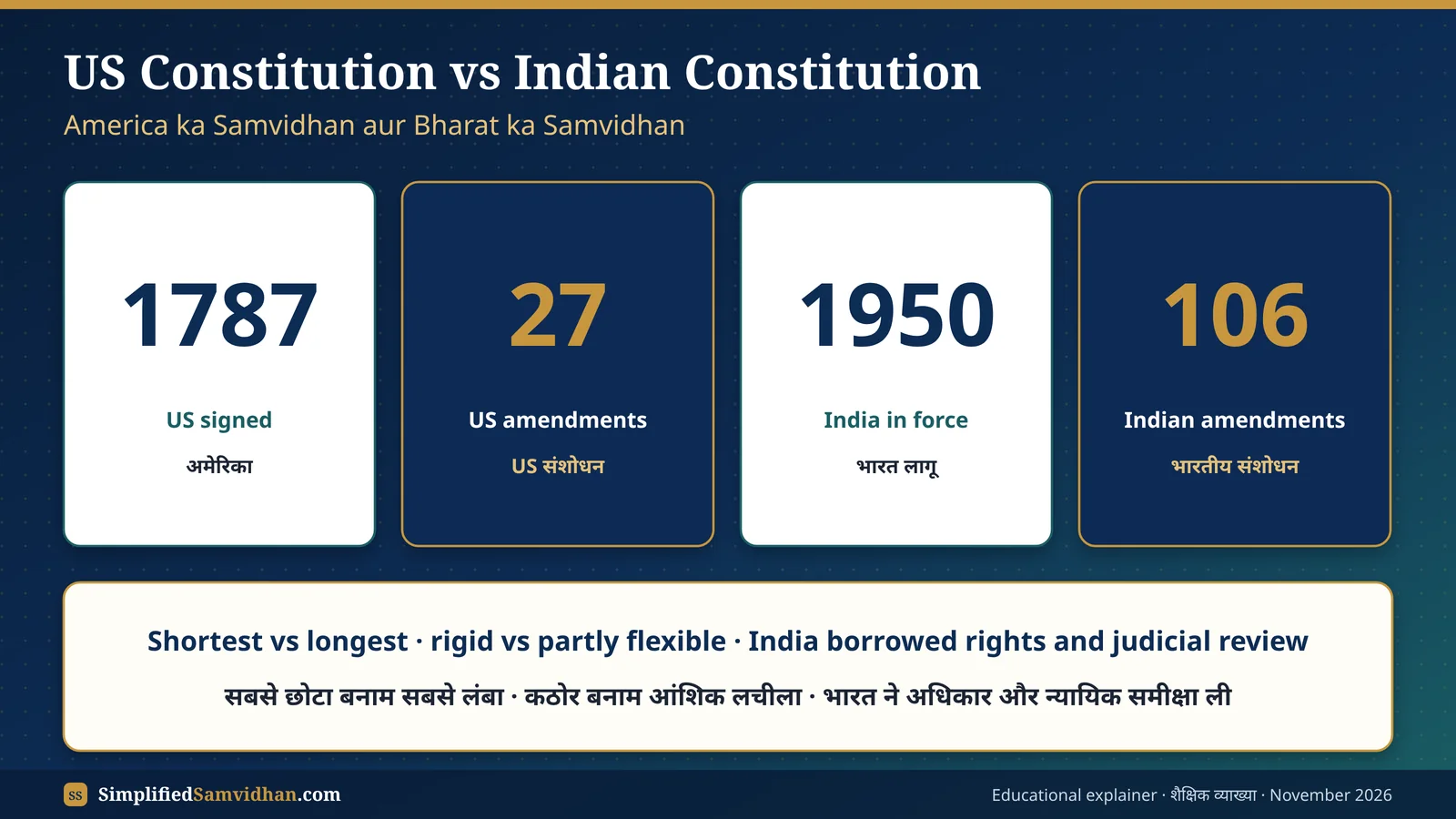
Read the notes →1787 vs 1950, 7 Articles vs the longest Constitution, 27 vs 106 amendments, and the features India borrowed.
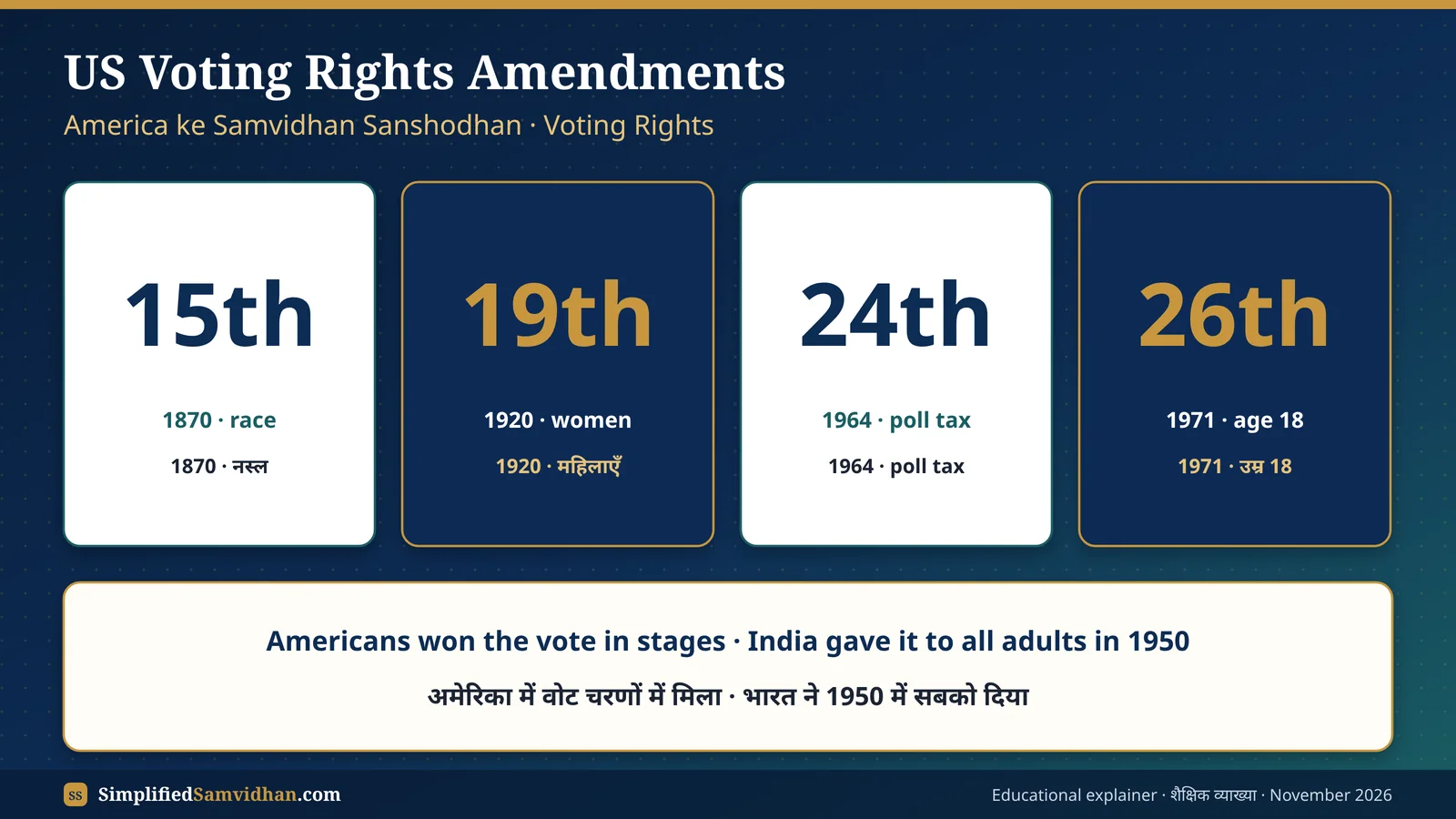
Read the notes →15th, 17th, 19th, 22nd, 24th and 26th amendments with exact text, one table of all election amendments, and India's 1950 universal vote.
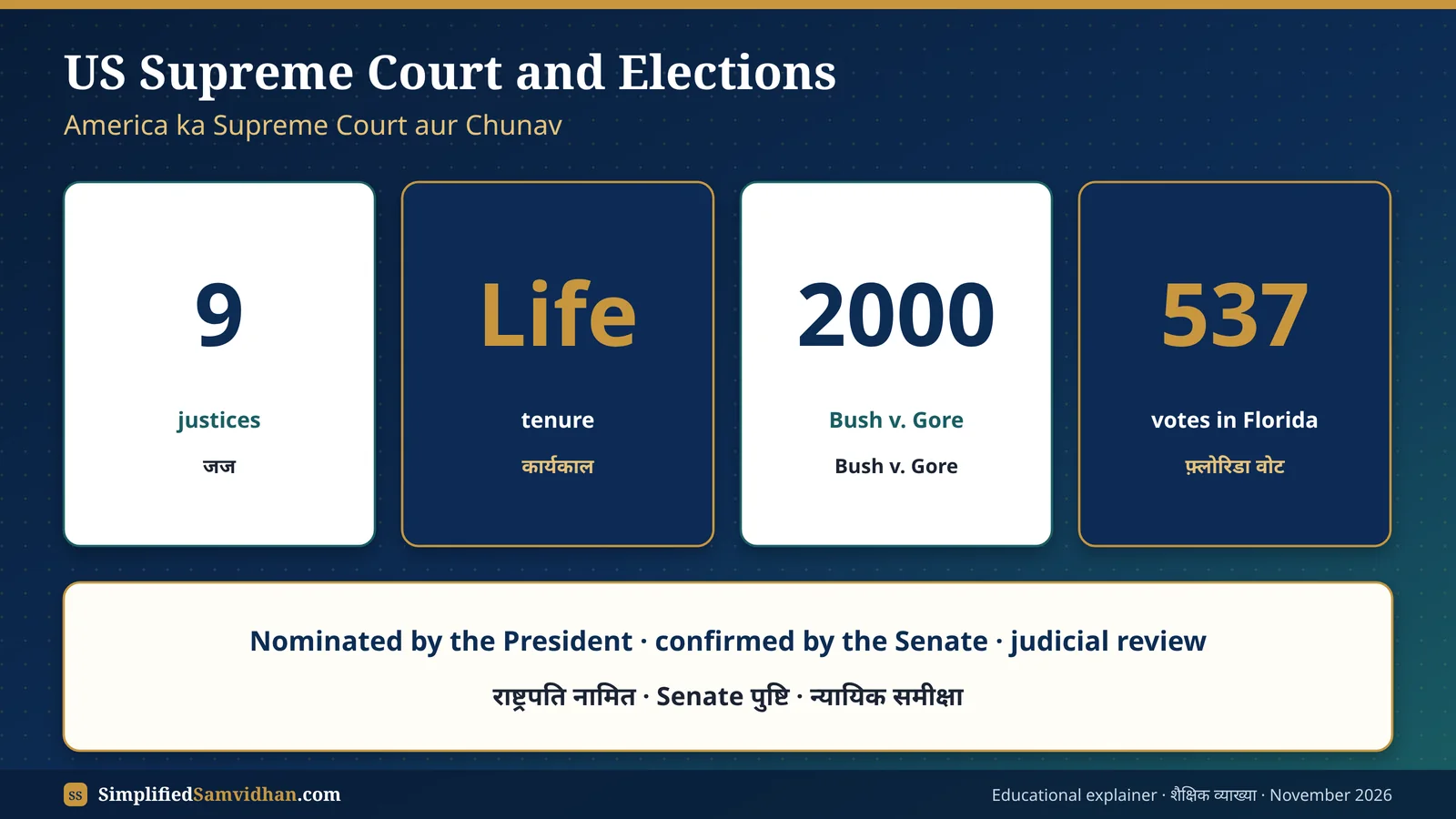
Read the notes →9 justices for life, Senate confirmation, seven landmark election cases from Marbury to Trump v. Anderson, and India compared.
Read the notes →13-point comparison table, the Article 324 difference, and what each democracy can learn from the other, for UPSC GS-2.
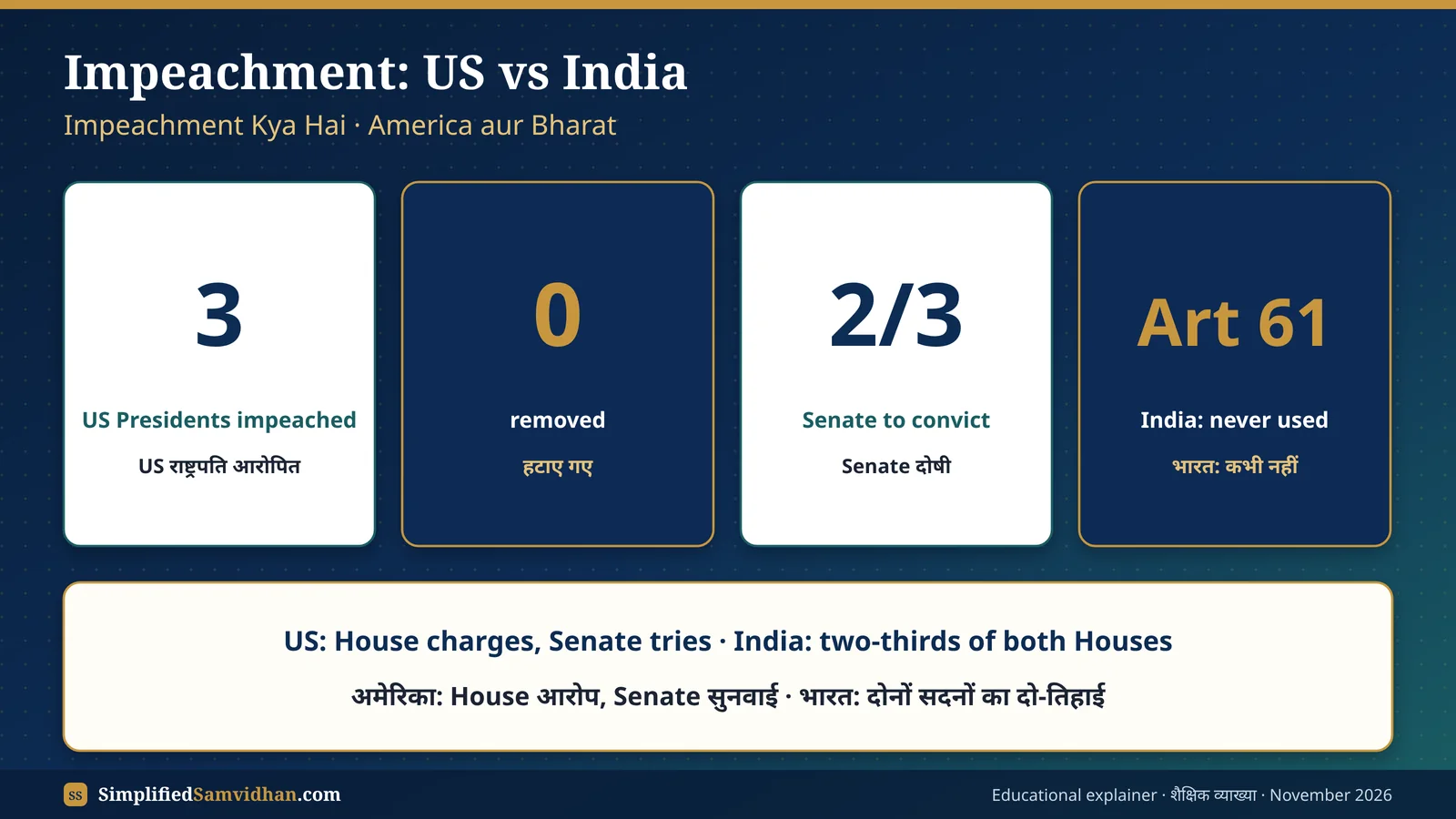
Read the notes →Meaning, US process and the five big cases, Article 61 step by step, and one comparison table.
Read the notes →Voters in each state vote for a pair of candidates (President and Vice President), but legally they choose that state's electors. There are 538 electors in all; a candidate needs 270. In 48 states the winner of the state's popular vote takes all its electors; Maine and Nebraska split theirs by district.
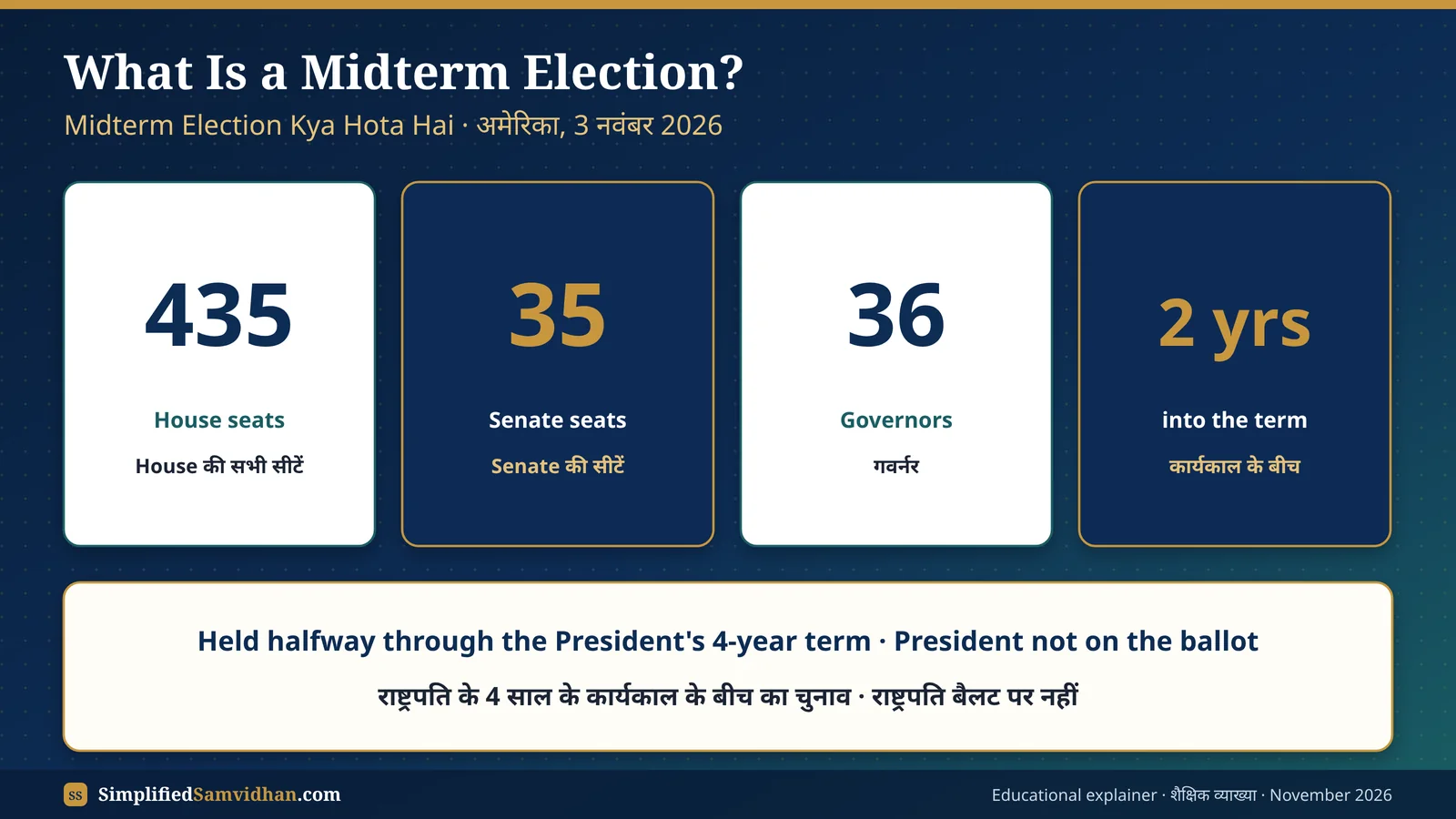
The general election held two years into a President's four-year term. All 435 House seats, about one-third of the Senate and most governors are elected. The President is not on the ballot.
According to projections on 4 November 2026, the Democratic Party won control of both the House of Representatives and the Senate, and a majority of governorships. Counting was still going on in several races.
On 7 November 2028 (the Tuesday after the first Monday of November). President Donald Trump cannot run again because of the 22nd Amendment's two-term limit.